

Acupuncture For Allergies - Treating Allergies With Acupuncture
by marciag
Acupuncture for allergies is a traditional Chinese medicine technique that helps remove allergies, restore the balance of the body, as well as help the free flow of the Chi energy.
What Is Acupuncture And Why Is It Useful In Treating Allergies?
Acupuncture is an ancient Chinese medicine practiced for treating a wide variety of health related problems, including allergies, and chronic pains of the body.
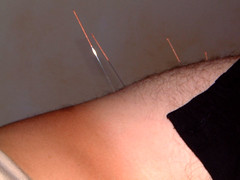
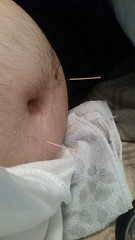
The way it is done is by using very fine metal needles that are inserted into the body in order to reduce inflamations, promote smooth blood flow and restore the chi energy balance. The needles are inserted in very specific places, called acupuncture points.
How Is Acupuncture Working For Allergies Treatment?
 Before the acupuncture treatment, the practitioner needs to first diagnose the problem. Basically acupuncture treats the illness from the inside out. The practitioner needs to know the eight principles, the channels and the zang-fu theories (the inner organs of the body) for a proper diagnosis.
The allergies are not some of the easiest to treat because they can be so many and can be caused by a lot of different factors, causing an imbalance in the body.
Just some of the factors influencing the occurance of allergies are too much stress, improper diet, air pollution, toxins from the environment, and even a weaker immune system.
As these imbalances remain in the body over a prolonged time, they create various allergies, which are the way the body is trying to fight off / to respond to the problem.
The acupuncturist will first examine the body, and just like a regular doctor, will take a full health history. Based on this he or she will develop the proper acupuncture treatment that will get rid of the symptoms of the allergy and also restore the balance of the body.
(public domain image courtesy of wikipedia.org)
What Other Problems Is Acupuncture Good For Besides Allergies?
Acupuncture is very useful for a wide variety of health related problems. Starting from allergies, headaches and migraines, anxiety and panic attacks, paralysis of the body (including facial paralysis), stomach pains, back pain, morning sickness, urine retention, tinnitus, tooth pains and even the common cold. As you can see, acupuncture is used for pretty much any common disease and some less common as well.
To treat each of these illnesses, the acupuncture practitioner uses specific acupuncture points on the body that are related to the various problem areas.
Acupuncture For Allergies Videos
How To Use The Acupuncture Needles For Treatment
 The needle are usually made of gold, silver or some kind of alloy. In most cases due to the price of the material, the most common needles are made of stainless steel of good quality.
The needle has to be strong, flexible and the tip is usually shaped like a pine-needled for best entry way. Due to the flexibility of the needle, and the fact that it is so thin, using it needs skilful precision by the practitioner. This is why the trainees in accupuncture are first practicing on regular paper or some small cotton cushions.
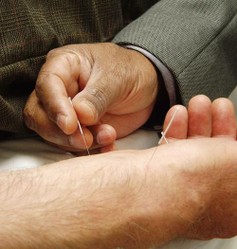
To use the needle for treatment you hold it in your right hand (the puncturing hand) with the index finger and the thumbs holding the top end (handle), while the middle finger holds the root of the needle (the middle part of it).
With the left hand (the pressing hand) you press on the area where the needle has to penetrate the skin. It is very important that proper hand coordination is developed so that the needle enters at the right point for it to work on the allergy.
There are a few ways to hold the skin for puncturing with the needle, such as stretching the skin or pinching it.
When it comes to withdrawing the needle, in order to prevent bleeding, it needs to be first rotated back and forth, after which the place will be pressed down a bit with a cotton ball, just like after a vaccin.
(acupuncture needle image courtesy of wikipedia.org)
Learn More About Acupuncture Treatments
 | A Manual of Acupuncture Once in a great while an extraordinary book is published that sets an entirely new standard in its field. A Manual of Acupuncture, published by Journal of Chinese Medicine ... |
 | Color Atlas of Acupuncture: Body Points - Ear Points - Trigger Points (Complementary Medicine ... This is the book professionals have been asking for! For the first time, a single pocket atlas covers all the major body and ear acupuncture points, as well as an extensive ... Only $91.69 |
 | Complete Idiot's Guide to Acupuncture and Acupressure If you are interested in knowning more about acupressure and acupuncture, this guide covers all aspects of treatment from choosing a practitioner to follow-up excercises. It ... |
 | Acupuncture: Everything You Ever Wanted to Know but Were Afraid to Ask If you have ever been treated by an acupuncturist and want to understand what it is all about, or if you are curious about whether acupuncture might work for you or someone ... |
 | Acupuncture: A Comprehensive Text Compiled by the faculty of one of China's leading schools of traditional medicine, Acupuncture: A Comprehensive Text is among the most authoritative textbooks and reference ... Only $16.59 |
 | Acupuncture for Everyone: What It Is, Why It Works, and How It Can Help You Learn how to find a good practitioner and what to expect from consultation and treatment• Recommended for acupuncturists' waiting rooms. • Designed for people with no previous ... |
Can There Be Any Accidents During Accupuncture Treatment For Allergies?
Sadly accidents have been known to happen during an acupuncture treatment. One of the most common one is when the needle breaks or it gets stuck. Also people have been known to faint or become dizzy in the process. Symptoms such as nausea, vertigo and irritability are not uncommon.
However as scary as these problems sound, they are rather rare and most people will never experience any of them.
You might also like
Japanese Acupuncture Benefits - With Alan JanssonCharacteristics and benefits of Japanese acupuncture, presented by Alan Janss...
Acupuncture For Migraines And HeadachesFind out why acupuncture treatments for migraines and other headaches are mor...

 Percy Jackson Books In Orderon 10/15/2014
 Meditation For Pregnancyon 09/25/2013
 New Age Meditationon 09/23/2013
 How To Use Essential Oils With Reikion 09/22/2013



Leave Here Your Comments About Acupuncture For Allergies
My son is an acupuncturist. I can say with confidence that acupuncture works -- at least it works for me.