
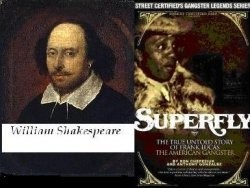
 The popular film, American Gangster, starred Denzel Washington as Frank Lucas, criminal drug lord in the 70s, who used the caskets of fallen soldiers being returned home from Vietnam to smuggle illegal drugs into the United States.
There was a scene in the movie where Lucas is being approached with a partnering-in-crime business proposal by another crime lord who made mention of the fact that he considered himself "a Renaissance man" and asked Lucas the question: "Are you a Renaissance man?" Not to be judged as anything less than an equal, Lucas countered: "I'm a Renaissance man too!"
Having heard the phrase "Renaissance man" used as a compliment when speaking of the famous playwright William Shakespeare, somehow I just could not make the connection between Lucas and Shakespeare.
I did some additional research thinking perhaps my understanding about the Renaissance was in error. Per The New Lexicon Webster's Encyclopedic Dictionary of the English Language:
- "The Renaissance created a culture which though based in large part on the imitation of the ancients, freed men to prove and enjoy the world in a way not possible under the medieval Church's dispensation. In this release lay the way of development of the modern world."
Aw forget about it! I'll damage my brain trying to connect the dots between Shakespeare and Super Fly. There is no Renaissance connection!! However, there were four other notable persons during that time period who were also referred to as Renaissance men: Francesco Petrarch, Giovanni Boccaccio, Francois Rabelais, and Desiderius Erasmus. It was much easier to connect the dots between those men and Shakespeare because they were also prolific writers who made a place for themselves in Renaissance literature.
[OFF THE RECORD and OFF TOPIC: American Gangster was one of Mr. Washington's better performances. Ditto for The Manchurian Candidate. Better. Not best. His best performance was Malcolm X, but he got the Oscars for Training Day and Glory. Whatever!]

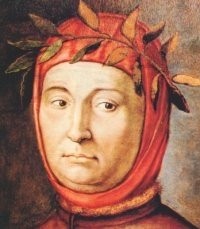 Translated and collected classical work manuscripts, wrote extensive letters and essays on religious, philosophical, and political topics. He wrote an epic poem titled "Africa", about the 2nd Punic War.


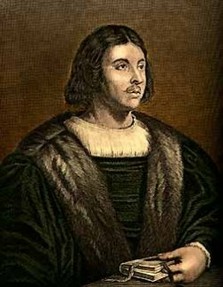 Authored romances, epic poems and idylls, and together with his friend Petrarch they laid the groundwork for the philosophy or belief known as humanism.


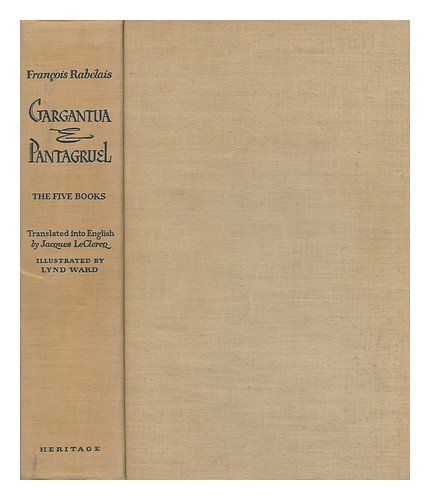
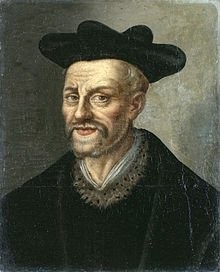 Best known for his satire, Gargantua and Pantagruel - a satire some believed was aimed at the feudal and the ecclesiastical powers of the day; which is, on the surface, the adventures of two rude but comical giants, father and son. There are divided opinions about his works. Some say he wrote from a Christian perspective flavored with humanism while others declare him to be a radical atheist and anti-Christian.






Comments
cmoneyspinnerDec 15, 2014
WriterArtistDec 15, 2014
cmoneyspinnerNov 7, 2014
cmoneyspinnerJan 20, 2014
suzette walkerJan 20, 2014
cmoneyspinnerAug 12, 2013
frankbeswickAug 12, 2013
By the way, Moneyspinner, I have nothing to do with Frank Lucas, I do not even know who he is.
cmoneyspinnerAug 12, 2013
Thanks for popping in!
TolovajAug 12, 2013
cmoneyspinnerAug 12, 2013
Thanks for visiting and giving this article a thumbs up.
frankbeswickAug 12, 2013
Of course the term renaissance is a bit self-congratulating, as learning had revived in the twelfth century, with the scholastic movement,long before the renaiissance. There were always learned men and some women in Europe throughout the so called Dark Ages. We can think of Bede, John Scotus Eriugena, Alcuin, Hadrian the African, to name but a few who were in some way associated with the British Isles. Charlemagne led a court which is replete with learned people. Hildegard of Bingen, a female, was one of the most learned people of the early middle ages, and was consulted by popes.