Collecting Seashells: Types of Shells

by Dustytoes

A broad look at the various types of seashells found along the Florida coastline and elsewhere.

Most people visit the seashore on vacation and pick up souvenir seashells without having any idea what they are called or how rare they may be.
On this page you'll be able to see pictures of the shells I have and maybe you will learn a bit about the ones you have in your collection. In fact, you may even have a rare shell and don't even know it!

Respect for sea life is important and I hope that by learning about the mollusks who make these unique homes for themselves, that we end up enjoying, you will agree that they deserve much respect.
There Are Two Different Types of Shells

Seashells can be found as one coiled shell, or they can be made up of two parts.

seashell colors

All the shells you see dotting the beach were made by the creature who lives (or lived) inside.  The mollusk is a marine snail and it's life becomes a work of art in the form of it's shell. 

Mollusks can create a shell that is either all in one piece, or in two sections that are hinged together.  The snails that create one, coiled shell are called gastropods, or sometimes "univalves", while the bivalves are the ones with two separate shell parts, like clam shells.

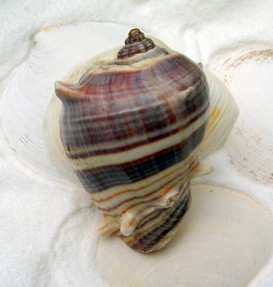
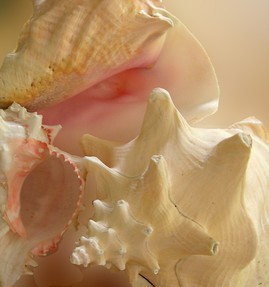
Generally, the difference in the shells depends upon  the lifestyle of each.  Gastropods crawl along the ocean bottom or among coral using a strong "foot" in search of food, while the bivalves attach themselves to something and are stationary, grabbing food as it flows past. (Photo: crown conch)

All seashell photography on this page is my own, unless otherwise stated.  My pictures are NOT free for use by others for any reason.

Cowry Shells

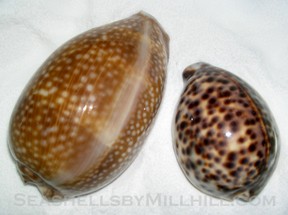
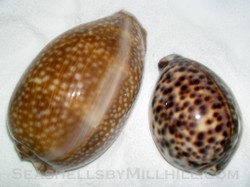
This shiny shell looks as if it's made of porcelain.

These are the cowry, or sometimes spelled cowrie, shells. I purchased them and didn't find them on the beach. Both are quite large, with the Atlantic Deer cowry (on the left in the photo) is about four inches long.
This type of shell is coveted by collectors for it's shiny porcelain appearance.  I remember when I bought it that I wondered if it was a real shell because it seemed like it was made of glass.

Some of the cowry shells were used as currency all over the world, many years ago. They are called money cowry - appropriately enough.  In fact, I have read that in some places the shell is still used as such.

Smaller versions of this shell are often used to make jewelry, and often times people will own a cowry necklace.

The Junonia is a Beautiful Shell to Add to Any Collector's Display

This is one of the gastropods to look for along the Gulf of Mexico.

Florida has many miles of beaches, but for the serious shell collector, the Gulf coastline is the best  place to do some beachcombing.

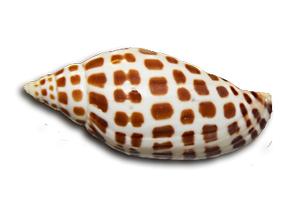
The beaches of Sanibel Islandjunonia seashell picture are known as one of the best places in the world for shell collecting - coming in at #3 - for it's shell abundance and variety.  It's the place where you could find a Junonia (pictured) which would be a treat.

Florida gastropods (single shell) you may find on both sides of the state include the following:

  • Slippersnail or Slipper shells (1-2 inches)
  • Shark's Eye (max 3 inches)
  • Fighting Conch (max 4 inches)
  • Worm Snail (length varies)
  • Cerith (about 1 inch)
  • Scotch Bonnet (max 4 inches)
  • Nutmeg (less than 2 inches)
  • Tulips (can be 4-5 inches)
  • Whelk shells (Lightning - see below, Pear and Knobbed)
  • Lettered Olive shells 

The "Left-Handed" Seashell

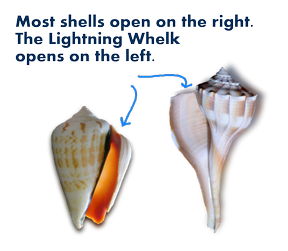
This shell has an unusual characteristic in that it's opening is on the left side.
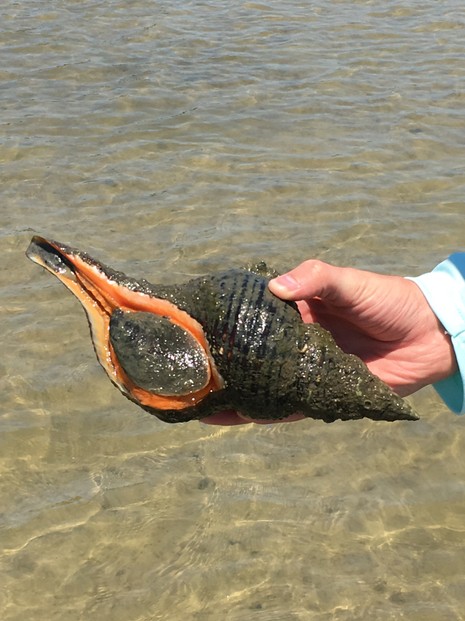
Adult and Juvenile Lightning Whelk

Floridia's Lightning Whelk

These can commonly be found in the Sanibel Island area.
The Lightning Whelk in Stages of Developement
The Lightning Whelk in Stages of Deve...

Do you have a nice collection of shells, or wish you did?

A lot of the time people who collect shells have no idea what they are picking up from the beach.
  Display results
I always took shells for granted until I began to learn about them.

Identifying The Beautiful, Striped Lightning Whelk Shells

The way this shell is made makes identifying it easy.

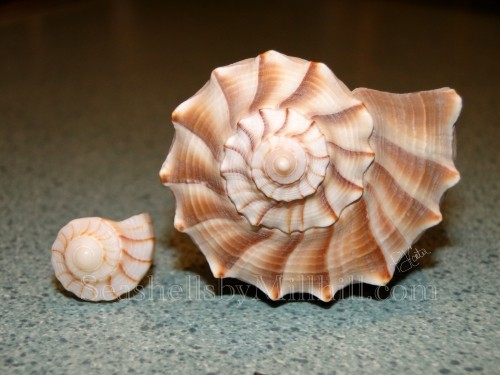
seashells apertures left rightI've had these two shells (above) for years but I only knew that the large one was a lightning whelk. The identity of the small one eluded me.

As I was going through my seashell collection one day, I looked more closely at the little one and it dawned on me!  It was a juvenile  lightning whelk!  I guess an expert would have known right away, but besides the fact that it is shaped the same, and the coloring of dark lines over white is similar, it's opening is on the left side!

Lightning whelks are sinistral, meaning that when you hold them by the tip, or bottom, the aperture will be on the left as opposed to the right like most seashells.  I'm glad it is now identified!

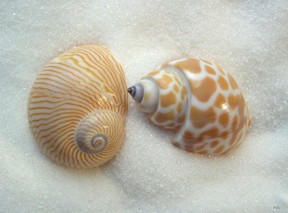
My photo here shows the whelk (right) with the strawberry conch.

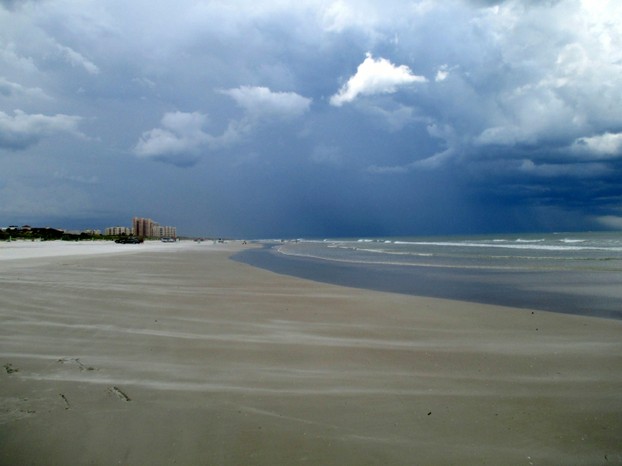
The Best Shells Can Be Found At Low Tide and After a Storm

And don't forget to pick through the seaweed washed up from high tide.
Even without shells, the beach is a beautiful place.
Photo credit: Pixabay

Get Yourself a Good Book About Seashells

I have Florida's Living Beaches and it covers everything you would find on the beach. Great photos too.
Florida's Seashells
$9.95  $5.49
Florida's Living Beaches: A Guide for...
$21.95  $13.23
Encyclopedia of Texas Seashells: Iden...
$50.00  $33.53

The Bivalve Shells Are Hinged

Shells that are, or once were, one of two halves are called bivalves.

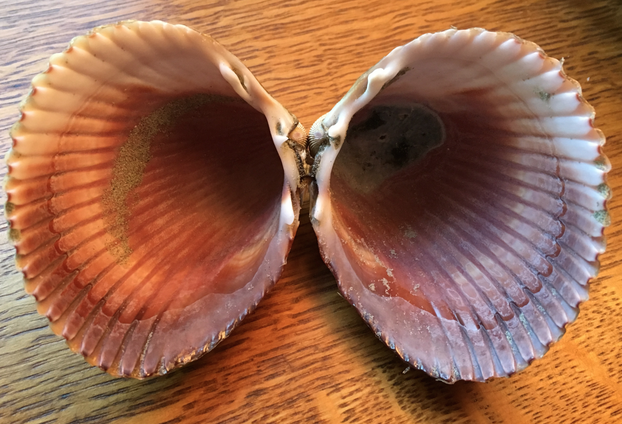
Bivalve shells are simply shells that were formed in two parts, such as the clam, scallop and oyster.

Usually you will find one part of the shell washed up on the beach as it has broken apart while being rolled in the surf. Finding a whole set, that is not alive, is a great find in my opinion.

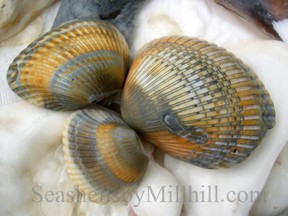
On the east coast of Florida the cockle shell (pictured here) is widely found and it can be white, tan, gray, brown or any combination it seems.

Also common finds along the east coast are the large pen shells, tiny coquinas, and numerous other types of clams and cockles.

How Do Seashells Get Those Colors and Patterns?

We tend to pick up the most colorful and unusual shells.

two little shells

The colors of shells are determined by their species and heredity mostly, but also by what the mollusk (animal inside) eats.

They have a fleshy mantle, or "cape", that may either partially, or totally, cover the outside of the shell and it secretes a calcium solution which grows the shell larger while creating the colorful patterns and ridges.  (The Flamingo Tongue shell is totally covered by a pretty, spotted mantle which is not part of it's shell.)

The mantle also polishes the part of the shell it touches and that is why some shells are very shiny. The coloring can also add hardness and be a camouflage to predators.  A good example of the use of shell camouflage, called countershading, is the Chambered Nautilus (see below).

The shape and type of shell produced will have to do with how and where the animal lives and hunts for food. If the shell has spines, like the murex, it may be to discourage predators, and if it's long and coiled, like the olive shell, it is useful for burrowing through sand.

Sealife is amazing and diverse.

A Collection of Tropical Beach Shells

This Poster by Artist "Strangling" Features a Large Nautilus Shell

Counter-shading In Marine Life

Marine animals, including some seashells, have this characteristic which helps them survive.

Counter-shading as it pertains to ocean life is a color pattern that helps keep an animal from being seen in certain situations.  All it means is that the top, or back (of an animal) is darkly colored and the bottom is light.  The dark coloring helps it blend in with the sea bottom when viewed by predators from above, and makes it more difficult to see when viewed from below as the water is lighter. 

Penguins, dolphins and some whales all make use of counter-shading to survive.


Everyone Looks For Starfish and Sand Dollars at the Beach

They are not mollusks, but echinoderms, and have a different type of "shell".

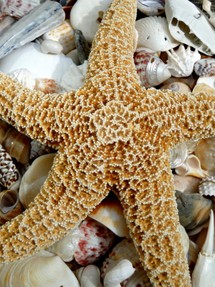
starfishAsk anyone what they would love to find while visiting the ocean and they will probably say a starfish or a sand dollar.
Sea stars (commonly called starfish) and sand dollars are not really shells.  They are echinoderms and if you find a dead one, you are seeing the exoskeleton of the once living animal. 

Sand dollars live on the sandy ocean floor and sea stars are also ocean dwelling, either moving over the bottom or clinging to coral and sea fans.  

They don't come up on dry land unless they have been washed up on shore by a storm, and then (if they are alive) they won't be white.  Sand dollars are generally dark colored and can be covered with fuzzy hairs in some cases.  Living ones will not look like the one in this photo.  If you find a white sand dollar on the beach, it has died and been bleached white by the sun.

The sea urchin also belongs to this group, and all of these treasures will be more fragile than seashells and will break easily, so be more careful when collecting them.

Enjoyable and Lovely Photographs of Rare and Extraordinary Seashells

This coffee table book gets all four and five star reviews at Amazon.
The World's Most Beautiful Seashells (Worlds Most Series)

Is It Possible To Find Large Seashells on The Beach?

It's very unlikely you'll find one of these just sitting on the shore.

large conch shells

Everyone who strolls the beaches would love to find that one beautiful, large shell.  Just imagine catching a glimpse of the protruding spire, with the rest buried in the soft sand, as the surf rushes out.  You run to the spot before it's covered with the incoming waves and quickly dig it up.  Wow, what a specimen!

I suppose it does happen, but in all my years of visiting east coast Florida beaches, I have never had this experience. Many mollusks who build these homes (shells) live in deep water and some are now protected species.

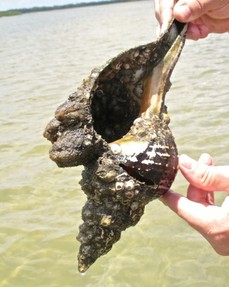
In fact the beautiful Queen conch's (pictured) numbers are in decline from over-harvesting for souvenir shops and food.  Conch meat is served in local restaurants on the Florida Keys and elsewhere.  And although this shell has been protected since 1985, it is making a slow comeback - read more at Jaxshells.org's "Who Counts the Conchs?"  Finding large shells usually means they are inhabited, so be sure to put them back after you take a photo to remember your find.


How To Tell if A Seashell is Alive - It's Really The Animal Inside That We Should Care About

Don't collect living seashells. They will die and smell bad, and in many areas it is against the law!

Seashells will be empty if they are "dead" and okay to collect.  If there is something protruding from the opening, or you see a hard cover over the opening, that means it is still occupied.

Take a photo and leave the little guy where you found him!

Seashells by Millhill is My blog

I write about my seashells, life in Florida, crafts, vacations and more on my blog.
I visit the “i love shelling” blog from time to time to see what vacationers to Sanibel Island, and the writer herself, have been finding along the Gulf Co...

Sometimes the Smallest Seashells Are The Prettiest

Take a closer look at what's near your feet

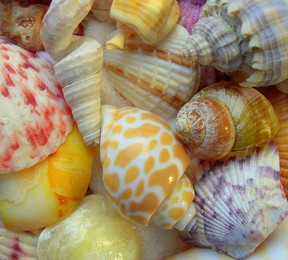
small colorful seashells

Every shell is unique and beautiful in it's own way and if you can get past the "bigger (shell) is better" mentality, you will discover some wonderful shells right under your feet.  In Florida the coquina clams are abundant and can make a colorful collection.  Conquinas can be just about any color and they live right along the wave line.  In fact when you see shore birds feeding in that area, they are probably eating coquinas.  Since they are so abundant, finding empty coquina shells are easy.  In fact I don't have many in my collection because they were so common to see on the Florida coast, I just did not collect them.

Other commonly found (in certain areas) small bivalves include jingle shells, kitten's paw, oyster and scallop shells.  (The purple and pink splotched shells in this photo are calico scallops).

LIttle gastropods (coiled shells in one piece) can be a great find with bumps and swirls of color, such as the Common nutmeg, moon snail and cowrie.  And remember that the large shells will begin as juveniles and sometimes tiny versions of a magnificent shell can be found.

Small empty (dead) seashells can be collected and used for crafts or decorating so don't overlook the little shells.

(Photo of tropical shells by P. Carter)

Some Advice For The Beach Vacationer

Don't get into trouble while on vacation at the beach

turtle nest

A tropical beach vacation is something many people plan all winter long so don't let your lack of knowledge get you into trouble. 

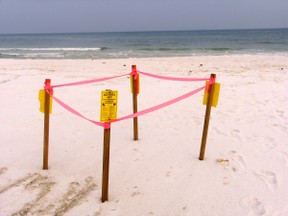
In many areas taking live seashells from their habitat is illegal.  Also disturbing dunes and especially turtle nests can get you into trouble.  Be aware of the rules and laws wherever you visit or vacation and don't disturb or collect wildlife.

If you do take living sand dollars or seashells, you will be sorry when the animal dies and begins to stink.

Also be aware that hurricane season in Florida runs from June 1st through November 31st with August and September being the two most active months.  You can't help it if a hurricane forms while you are on vacation, but knowing about evacuation proceedures and what to expect ahead of time is a good idea.

(Photo: Sea turtle nest marker.  Credit:Morguefile)

Seashells to Color, For the Kids

Please help yourself and use for classroom studies, homeschool projects, or just for fun.
Seashell Coloring Pages #1

Print out and color pictures of conchs, junonia, cowry, and others listed on this page. Also a matching page for teaching, that matches pictures with names of shells.

Seashell Coloring Page #2

Color starfish, seahorse, mermaid, nautilus and more by clicking on the printable links listed in this article.

You might also like

Where to Buy Seashells, Driftwood, and Nautical Craft Items to...

Nautical decor is popular, not only for those who live at the ocean, but for ...

Seashell Cases For Your iPad Mini

For those who love to take part of the beach with them wherever they go, prot...

Sailors' Valentines Shell Art

In the 1800's sailors would bring seashell decorated boxes home as gifts to t...

Dustytoes, on 05/29/2011
 
Thank you! Would you like to post a comment now?
17

Are you a regular sheller?


   Login
KathleenDuffy on 03/20/2013

Lovely article with beautiful photographs! A true labour of love. I learned a lot!

Dustytoes on 02/28/2013

Thank you wrapitup4me, Mira, and Catana for sharing your sea-shelling experiences. It's a shame when man interferes with nature to "help" us, and we lose opportunities in the meantime.

Catana on 02/27/2013

I used to collect shells as a kid, growing up in Miami. Mostly at Crandon Park, where my dad took us kids pretty regularly. That ended when a barrier was installed to enclose the beach and nothing could get in any more except the water.

Mira on 09/24/2012

I collect shells too, but know next to nothing about them. Now I've learned a few very interesting things: not just their names, but also how they're formed, etc. It's great to find your article!

wrapitup4me on 08/25/2012

This is a gorgeous article. Almost got me headed out to hunt for unoccupied shells.

Dustytoes on 08/25/2012

Your "secret" shelling island sounds wonderful. I have found lots of living sand dollars on the Sanibel Island coast. It's amazing how different the live ones look.

katiem2 on 08/25/2012

Oh how love the beach, walking along finding beautiful shells. The beach is one of my favorite places in the whole world. So thrilled we have so many amazing beaches to enjoy. ONE of my favorite places to go shelling is the outer banks of the Carolina's. I go to Atlantic Beach, take a charter boat out to a collection of small islands, one of which is shell island. It's a beach known for it amazing shells. Wild horses run the island, it is an amazing secret and a must do on anyone's bucket list. I also love, possible my most favorite of all, sand dollar island, it's this dun like of a small island far off shore that is surrounded with sand dollars. The water around the island is very shallow for a few hundred feet, you can wade out and actually see and feel live sand dollars. Removing live sand dollars is not allowed, but you can take the dead ones. The live ones are a sort of brown color, you can see the moving hair like fingers when you turn them upside down. Amazing. I bring shells back and add them to my landscape beds. Great article, thanks for bringing up fond memories. :)K

Dustytoes on 04/09/2012

Thank you 2uesday, glad I could be of help with your seashell identification. Thanks for the nice compliment about my photos too.

2uesday on 02/13/2012

Reading this page I have found the names of some of the shells that I have owned for years. Beautiful photos of shells.

RJBradley on 01/13/2012

Up here in the Pacific Northwest I rarely find anything besides mussel shells along the beaches. I consider it a lucky find if both halves are together.


Disclosure: This page generates income for authors based on affiliate relationships with our partners, including Amazon, Google and others.
 
Loading ...
Error!