

Grammar Tips and Hints
by tandemonimom
Join me for some grammar fun! Yeah, I said 'grammar' and 'fun' in the same sentence. Deal with it.
Don't Hate Me Because I'm Grammatically Correct ...
I actually enjoyed diagramming sentences in high school. Whew! It feels good to get that confession off my chest. Having read it, I'm sure you might have some better understanding of why I chose to take Advanced Grammar courses in college and moved on to work as a proofreader and then editor a few years later.
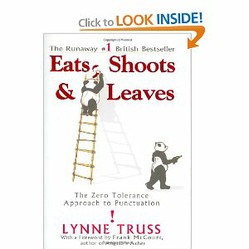
Great gifts for grammarians!
 |
 |
Yes ... I am the grammarian about whom your mother warned you. (That sentence is funny, if you realize that it flipped things around so the sentence wouldn't end with a preposition ... oh, never mind.)
Actually, speaking of not ending a sentence with a proposition, I share Winston Churchill's opinion of that grammar rule: "That is something up with which I will not put." Do you know why it is considered wrong to end a sentence with a proposition?
Why is it considered wrong to end a sentence with a preposition?
My Grammar Articles
And now that I write online, I've taken the next step in my grammatical journey: I'm writing grammar tips for you, my reading audience. I know, you hate grammar ... but whether you like it or not, you use it every time you open your mouth, so you might as well use it in the most impressive way possible! I promise you, I'm really pretty good with explaining once-arcane rules in a way anyone can understand.

The serial comma is actually a subject of debate. Journalists are taught to eliminate the comma before "and" in a series (presumably to save printing space) but all other style manuals call for use of the serial comma. Join in this important debate!


Ay, me! When, oh when, is it proper to say "John and me" versus "John and I?" (Here's a tip: it is never proper to say "me and John.") This page contains a totally simple rule to follow and one that is easy to remember, too ... but I'll bet your teachers never told you about it!

If you think this article begs the question of when to use "begs the question," then you should never use the phrase, because you don't know what it really means.
I'll be adding to this collection of simple and fun grammar tips. (I know, I know: you don't think grammar is fun, but I'm fun, and reading my page is fun, and maybe you'll actually learn something!) So check back often and see what's new! I promise to keep it light, as simple as possible, and fun as well.
You might also like
Hans Christian Andersen - a few words on his originalityHans Christian Andersen is usually praised for his originality. Here are 10 n...
How to Use a CommaCommas and how to use them turn some people in knots. Yet when used correctly...

 Wind Says Good Night | A Best Picture Book Reviewon 04/03/2012
 Tumble Tower | A Best Picture Book Reviewon 12/29/2011
 Jamberry | A Best Picture Book Reviewon 08/02/2011
 Shoes | A Best Picture Book Reviewon 07/27/2011
Comments
Well, I'll be! Another sentence diagram queen. They were kind of fun. (Shhh! It'll be our little secret.)
I really appreciate this article. I decided to learn to write right. Will be back here often!
Always good to read about grammar - I'm glad to see other people take it as seriously as I do. Great article.
I beg of you, write more grammar tips articles! I learned why that silly rule exists about not ending a sentence in a preposition, so just keep it up! By the way, I love the serial comma.
Where do I sign up for the comma-phobics class?
Yes, you ARE fun and so are your grammar tips.
We need you Carma and I do too especially. (Off to the corner.)
Your grammar tips are great for all of us! Thank you!
PS I always liked diagramming sentences, too. Maybe there is a support group for us somewhere. :)