Juba, South Sudan, for the Intrepid Traveller

by Sheri_Oz

Juba is definitely off the beaten path. Be among the very first tourists in this newest nation and meet the fascinating South Sudanese in a most unique tourist experience.

In Juba, temporary capital of the newest independent country in the world, most foreigners are aid and advisory personnel. Happily, there is room for a tourist experience that cannot be found in many other places in the world. Everything, from landing in the airport to leaving again, is an adventure in Juba.

After my second time there, I have now updated the information in this article.

New Ruling Regarding Entering South Sudan

Starting in early October 2012, it is no longer possible to enter South Sudan without having obtained either a visa or properly signed entry permit before arrival. No airlines will permit you to board at your last connecting flight into Juba unless you show either the visa or entry permit.

There are no exceptions.

Many travelers flying to Juba through Addis Ababa, find, to their chagrin and great frustration, that they are not being allowed to board the Addis-Juba flight. The South Sudan embassy has a consular section that can issue visas. However, there can be delays and you must be aware of consulate hours. It is best to get your visa before setting out.

How to Get to Juba, South Sudan

Not many roads to Juba

In fact, there really is only one road to speak of.  There are two roads, but calling them both of them roads is rather a stretch. And 'stretch is' the appropriate word for the Yei-Juba road: on and on it stretches, dust and bumps for 4-5 hours from Yei, close to the borders both of Uganda and the Democratic Republic of the Congo, to Juba. Only 170 kilometers. When paved it will take about 1.5 hours to drive.  I have heard there are buses from Uganda to Juba on this road. Four-wheel-drive vehicles can make the trip.

Alternatively, many Ugandans enter and leave South Sudan at Nimule, a border town, on a road that has finally been paved.  Trucks make the journey, bringing goods into the country, and I have read that some daring individuals have hitchhiked the route but there really is no reason to hitch since the public bus is so cheap. 

One good thing about these roads is that there are villages along the way - nothing with inns or restaurants, so you need to plan to be in Juba by nightfall, but the people are nice and you can buy local honey that is delicious. There is a National Park in Nimule that you may want to see while you are here.

Most people enter and leave South Sudan by plane. Remember to get your visa or entry permit before you leave your country of origin.

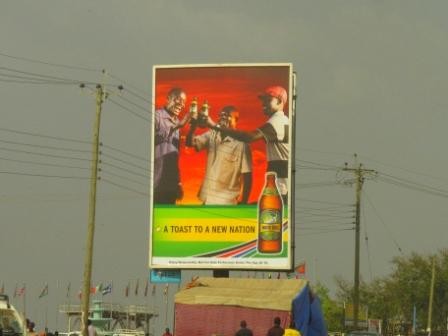
Toasting the New South Sudan
Photographer, Sheri Oz
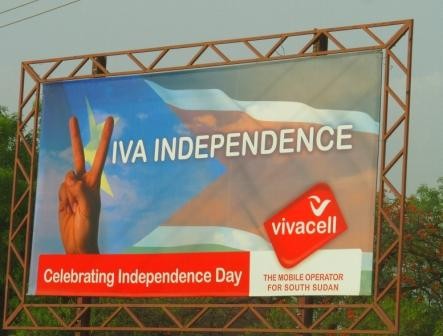
Mobile Phone for South Sudan Independence
Mobile Phone for South Sudan Independ...
Photographer, Sheri Oz

South Sudan Telephone Codes

When you call South Sudan from outside the country, the phone number is comprised of the country code followed by the cell or landline company code, followed by the phone number. I have only called cellphones. The number you dial looks likes this:

+211 9xx xxxxxx 

If you are in South Sudan, then you remove the country code and add a zero before the cell company code. The number you dial looks like this:

09xx xxxxxx

Juba International Airport

Expect an airport that looks like the wild west. Your bags are brought into the main hall where you line up and wait for your visa. Thrown onto a pile, that is, through a hole in the outer wall. No conveyer belts. Just a pile of bags. Make yours distinctive so you can pick it out of the crowd. And whatever you do - DO NOT LOSE the baggage stub you got when you gave in your bags at the ticket counter. A guard will check the stub and the number on your bag to make sure you are only taking your own luggage.

You collect your luggage and take it to a counter where security people riffle through everything and if all is okay, they write "ok" on the side with chalk.  Passport and bags in hand, you then pass through a small opening where a guard checks that you can enter the country.  Before you leave the next hall, another guard will check your bag tickets. 

Finally! You are now in Juba, South Sudan.  If you are working for an NGO or have a friend coming to pick you up, you wait in an old hall without walls. If you are a lone tourist, you can take a taxi into town (less 10 minutes drive). A friend tells me it should cost no more than 30 South Sudanese pounds. If this is your first time in South Sudan, you likely don't have any South Sudanese pounds on you. I don't know what to tell you in this case as I didn't face this particular challenge. Perhaps the taxi driver will change a $100 bill for you. Make sure you know the current exchange rate and ask for a little bit higher than that. You may not get it but you certainly should not get less than the official rate.

Exchange Rate for the South Sudanese Pound

When I was last there mid-August 2012, I got 5.2 SSPs to the American Dollar.

In March 2012, it was something like 3.5 SSPs to the dollar.

Now, in November 2012, the exchange rate is about 4.2 pounds to the dollar.

Packing Tips for Travel to Juba, South Sudan

Weather conditions and such

It is hot in Juba. All year round. When I was there in March 2012, it hit 45 centigrade more than once; in July-August it reached a 'nice cool maximum' of 35 centigrade! Luckily it is also dry. Expect to sweat, however. Perhaps carry around a small washcloth as the Africans do to periodically wipe the sweat off face and neck (and bald head for some of you men). I found this highly inconvenient - opposed to the beautiful African women, I need makeup to look decent and so this was not an option for me. I was not going to give up vanity for comfort.

in this, my current trip, November 2012, it is still the rainy season. You should have closed shoes for town and rainboots for smaller towns for the rainy days. There are no paved roads or sidewalks in smaller villages and lots of puddles. It can get cool in the evenings - but not cold enough for most of us to merit wearing the winter coats I see South Sudanese people putting on! I am doing fine with short sleeves but some people may feel the need for long sleeves. From late morning till early evening, it can still be wickedly hot.

Feet - since the roads are mostly not paved, closed shoes are best. However, you are likely not walking much in town (most people hire drivers) so sandals would be fine. I had Teva sandals and these were great. They give good support to your feet, are comfortable over all terrains (even the walk from the van to the building you are going into may be pot-holed and uneven) and look good during the day and evening.

Clothing - people dress modestly and you are advised to do the same. They appreciate that. Men do not have to wear suits, just not shorts or chest-baring open shirts. Women should not wear shorts, halter tops, spaghetti-strap tops or plunging neck-lines. You can wear pants, but most women wear dresses and skirts. In August, a mere 6 months after my first visit there, I did see more young women wearing jeans, but still very few.

Cellphone - your smartphone will likely not work at all here. Bring a simple mobile phone that has been unlocked so that you can buy local SIM and time cards that are sold at reasonable rates in the market.

Cash - there are no ATMs yet. Bring American 50-dollar or 100-dollar bills (100 is best). The bills must be newer than 2006. They can be changed at your hotel. When I was here in March 2012, the rate was 3.5 South Sudanese Pounds to the dollar; now, in August 2012, the rate is about 5 SSP to the dollar. Be sure you have a crisp bill for the airport or else you won't be able to get a visa. How much is enough? Bring a bit more than what you need for hotel and transportation. Food is not terribly expensive and there really is not much to buy in the way of souvenirs.

Electricity - bring an international converter to fit the African sockets.

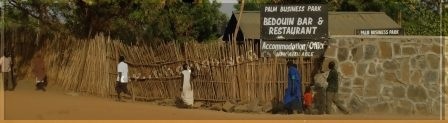
Bedouin Hotel Fence
Bedouin Hotel Fence
Photographer, Sheri Oz

Where to Stay in Juba

There really are many places to stay

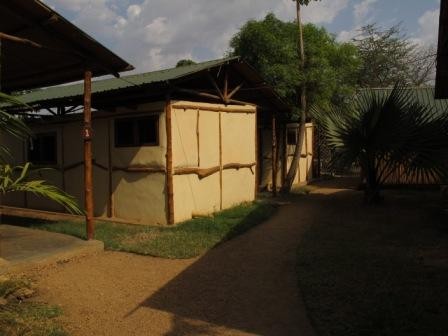
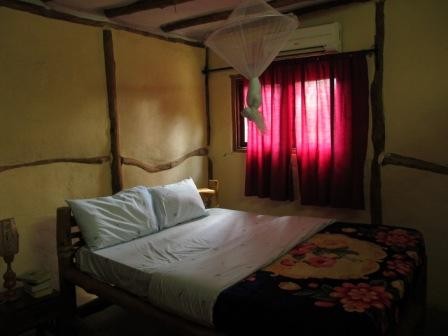
But I will tell you about the Bedouin Hotel, where I stayed.  It is a lovely place, quaint African decor.  It is built of local materials with tree branches serving as the framework, just as you would find in typical African homes.  There are rooms with private toilet and shower, a fridge, television and, most important, air conditioning.There are also rooms without private toilet and shower that cost a bit less. All the rooms are behind a security fence and gate and during the night, a guard makes sure that only residents enter that section of the property.

The restaurant/pub is open to nonresidents and, in fact, is a popular place for aid people to unwind after a hard day's work in the various ventures that operate in Juba. 

Breakfast is a good start to the day - coffee or tea, peanut butter, toast, cereals and fresh fruits. Lunch and supper are not very exciting. They make good soups and their tuna salad is terrific. We asked for grated cheese and slices of avocado to be added and they cheerfully did, without increasing the price.

The staff is pleasant and the atmosphere friendly.  This is a good place to talk with all kinds of people and one of the memorable parts of my trip was meeting interesting people sitting at the tables with drinks and laptops - journalists, doctoral students doing their field work, aid workers, all working in Juba and sometimes in outlying areas of South Sudan. 

There is wireless Internet connection in the rooms and the restaurant that is free to hotel residents.

Hotel Grounds
Hotel Grounds
Photographer, Sheri Oz
Hotel Room - Bedouin Hotel
Photographer, Sheri Oz

Essentials for Your Adventure Trip to South Sudan

Samsung E1080 Unlocked Dual-Band GSM Phone - International Version with Warranty

You can buy inexpensive SIM cards and time cards in the market. It is important to have a cellphone here as the best way to get around Juba is by having a driver you trust and can call on personally. All communications in S. Sudan is by cell.

View on Amazon

Naot Women's sandals

With many styles and colors to choose from, these are all great sandals for all year round in South Sudan. I wear mine both to work and in the evenings. They are comfortable and look good. Be careful not to step into puddles with them, however.

View on Amazon

Noat Men's Sandals

Men in South Sudan do not wear sandals to work. A casual, sturdy shoe would be in place if you are working here. For casual wear after work and on weekends, select one of Naot's wonderful sandals for men. These last for years and look good.

View on Amazon

Insten Universal World Wide Travel Charger Adapter Plug for the socket only - does not convert electrical output current and voltage

This is the handiest adapter plug ever made.

View on Amazon

Spiritual Lessons I Learned in South Sudan

Spiritual Lessons I Learned in South Sudan

When you give you receive. I came out of my two-week project in South Sudan with a more solid sense of self, a kind of peace inside that I have never known.

Where to Eat In Juba

A Bigger Problem than Where to Sleep - But Getting Better

You don't go to South Sudan to eat - you go for the adventure or for the humanitarian projects abounding there. I was highly under-impressed with the food during my first visit in March 2012. In some cases, some items listed in the menu were not available.However, by August 2012 the situation was greatly changed and continues to improve all the time.

The best meals I had there were pizza at the Afex compound, Chinese food at the Chinese restaurant on the airport road, fish at the Paradise Hotel, Indian food at the Oasis Camp and a decent and varied menu at Logali House. The prices were not high.

The Afex compound is a hotel on the Nile within walking distance of the Bedouin Hotel. It is safe to walk there during the day (however, I would never go there alone), but at night it is best to walk in groups of 3 or more. While the Oasis Camp is not too far from the Bedouin, it is still best to go by vehicle because of the area through which one must pass to get there.

In November, I was invited to join a friend for a meal at Le Bistro, an Italian restaurant and coffee shop. They have real Italian cakes and good coffee. I didn't eat there but the menu was interesting. There is outdoor and indoor seating with a good atmosphere.

I was told of newer restaurants opening up all the time, and that is an interesting development for this underdeveloped city.


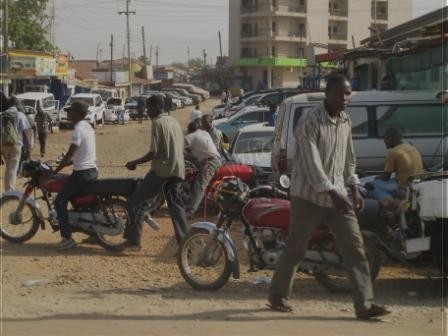
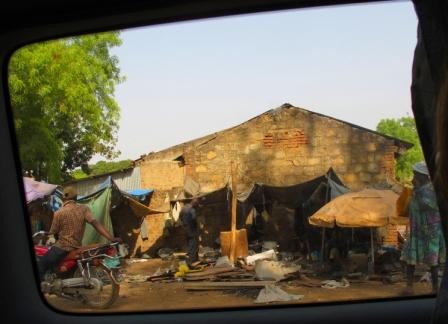
Roads in Juba are Mostly Unpaved
Photographer, Sheri Oz
Working at the Side of the Road
Photographer, Sheri Oz
 

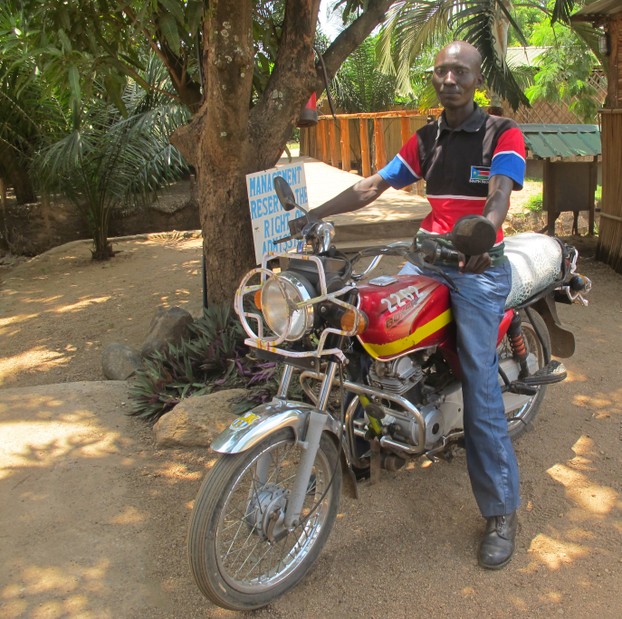
Boda Boda Driver, Aziz

Aziz and His Boda Boda
Photograph by: Sheri Oz

Getting Around Juba

Boda Boda or Car?

For jaunts within the city when you are not taking your luggage with you, I want to recommend Aziz. He speaks great English, loves to talk with the nice people he takes on his boda boda (motorbike), drives slowly and safely and I really like him. Call him at 0955 038922 and tell him Sheri from Israel gave you his number. I don't get commission, just he would probably like to know how you heard of him.

If you need to take your luggage, then I highly recommend Fred. As a Kenyan, Fred also speaks great English, is friendly, a safe driver and reliable.  His number: 0956 063620.

What is There to Do in Juba?!

South Sudan is for the Adventurous Tourist

Juba is not yet set up for tourism. Therefore the tourist who is looking for places that are off the beaten path will find that South Sudan is a place that has not yet got anywhere near the beaten path. All tourists will discover something very few other people have ever seen.

A sign of the coming times is a new store called "The Roots Project" (Tel: 0920 427633). This is a women's cooperative where women can sit with their children and do traditional bead work and basket weaving that are sold at reasonable prices. This is as close to non-touristy souvenirs that one can get. Just ask the driver to take you to the store opposite the basketball courts in the Nimra-Talata neighbourhood. There is also a book store there where you can trade in your English books and stock up on new titles.

The markets are for locals only - fruit and vegetables, ground-nuts, African fabrics, housewares. You will see almost no tourists here. Come during the day and sit and talk with locals. This is what South Sudan tourism is all about - talking with the people. They are very friendly.

Other Necessities for the Adventure Trip

Emergency Zone Canopy Mosquito Net for a Sound Sleep.

Folds into a compact zipper nylon bag fthat is light and easy to carry. You may want to bring your own net as some hotels may actually have nets with a few holes in them. Better safe than sorry.

View on Amazon

MAGLITE M2A116 AA Cell Mini Flashlight, Blue - Highly Recommended Travel Necessity

You may not be lucky enough to have a self-contained hotel room (bath and toilet en suite) and will be going outside in the dark to the latrine, especially outside of Juba (electricity is not 24/7). You want to see where you're going.

View on Amazon

MagLite LM2A001 Replacement Lamp for AA Mini Flashlight, 2-Pack

Package of 2 light bulbs. Fits Maglite AA series flashlights. It is easy enough to buy extra batteries, but you want to be sure you have enough lamps for the entire trip.

View on Amazon

Camelbak Elixir Electrolyte Enhanced Hydration Supplement - Berry Flavor - Keep Healthy

Blend of electrolytes, vitamins and minerals help maintain body fluid balance to keep you healthy and strong even in the extreme climate conditions of South Sudan.

View on Amazon

Poster made from my photo, sold on Zazzle

Taking Photographs in Juba

While it is not illegal to take photos in Juba, the police in South Sudan still think it is. They will not let you take pictures of them nor of government buildings or even the street.  If you see a police officer or a soldier, it is best to put the camera away. People have been known to have their cameras taken away from them.

On the other hand, many people are happy to have their pictures taken. They like to see themselves on the camera screen after you have clicked the photo. In many cases, if you smile and ask if you can take a picture, most people will agree. Some will turn away and expect you to respect that. If you want to take photos, it is best to engage the people in conversation of buy something from them at the market first - then ask if you can have a photo that will remind you of them when you return home.

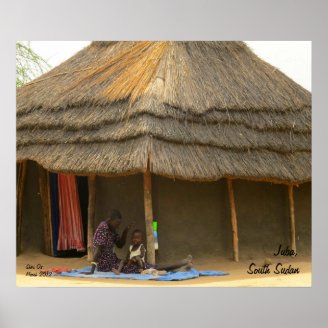
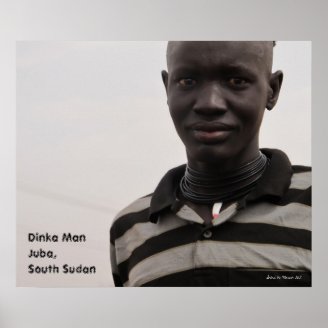
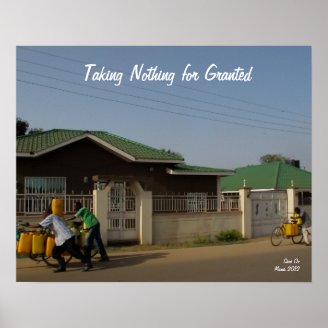
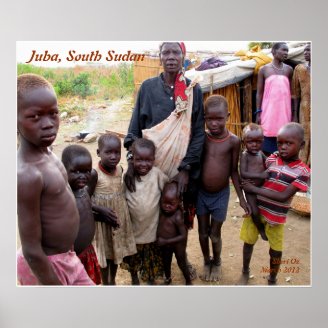
All the photos on this page were taken by me. Some of them have been put onto posters and other products and are sold on Zazzle.

Poster made from my photo, sold on Zazzle

One Market in Juba on YouTube

It really does look like this . . . just more! Hundreds of small shops selling everything under the sun.

Going to Church in Juba

Sunday morning is a great time to be out walking and seeing families dressed in fine clothes.

Some of the workshop participants invited us to join them in church on Sunday. Prayers between 8-10 am were in English and later prayers would be in Juba Arabic.

The church was a simple construction in an industrial area and would not have passed fire department inspection. On the stage at the head of the church were old couches, a lectern and sound equipment. The pews consisted of rows of plastic chairs. The first two rows, however, were old soft armchairs.

The prayers were conducted by one male and two female singers, one of the workshop participants being the sound man. The pastor gave a short sermon part-way through the service and testimony was heard by all who wanted to give it. One young man rose to his feet and went to the stage. He was tall even by South Sudanese standards and very thin. He talked about being illiterate and from outside of Juba. Coming to church, he has learned to speak English. He has hope for his future.

I liked how, at the end of the service, everyone filed out of the building into the yard, shaking the hands of those already in line outside and then joining the line. But the end, everyone had shaken everyone's hand and everyone then mingled before going on our way for the rest of the day.

More Photos from Juba, South Sudan

Juba, South Sudan, In Photos

Here is a selection of some of my better photos from my two-weeks in Juba. I will put up more photos with time. I am also adding my photos to Zazzle products. Hope you enjoy seeing this new nation-in-the-making.

In Case You Get Sick in Juba

I've checked out the health clinic for foreigners for you

I did not mean to do this. In fact, I would have been happy to have skipped this little bit of my trip. But in August 2012 I got sick. It started off like a normal cold and just got worse and worse and worse until by the time my work project was over I had totally lost my voice and had a fever.

I went to two clinics and I am going to recommend only one of them. It is the only one of the two that I can, in good conscience, recommend.  The Unity Clinic (Telephone: 0922 054856 or 0955 663311). I found their medical and support staff professional at a level I would expect in Israel. The visit is expensive ($150 for the check-up alone) if you are not a member of an NGO with an arrangement with them, but your travel health insurance should cover it. They have arrangements with several international insurance companies and can arrange evacuations from anywhere in South Sudan if necessary. For more information before you set out on your trip, you can write to them at: SudanMedical@unityresourcesgroup.com.

I suggest you compare travel insurance companies because if you actually need the insurance you want to know you have the best.policy possible. Inquire about the following points:

  • Can the policy be extended while you are away?
  • What deductibles are involved?
  • Are there medical emergencies that are not covered?
  • Will the cost of changing a flight be covered if required because of a medical emergency?
  • Are medications and medical equipment included in the policy?
  • Does it cover pre-existing conditions?


Unity Clinic Grounds

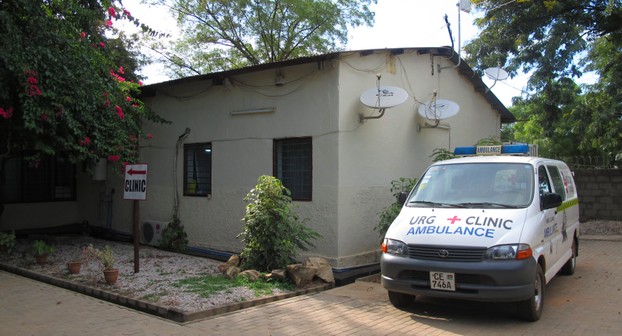
Unity Clinic Entrance and New Ambulance
Photograph by: Sheri Oz

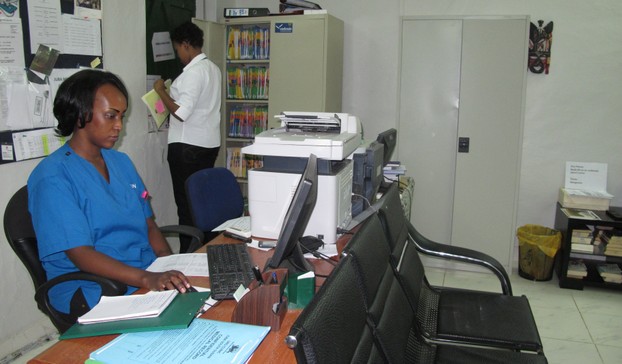
Unity Clinic Reception Area

Reception and Waiting Room
Photograph by: Sheri Oz

Allergies in South Sudan

Turns out that I wasn't sick but had a bad allergic reaction.

There are plants we have never heard of and the pollinate at various times of the year - mostly during the winter months (June-September).  If you have hayfever or sensitivity to dust and pollen, I strongly recommend that you consult with your doctor before you go. I know that before my next trip there, I will begin with antihistamines before my trip and have a good supply of allergy medications just in case.

I was hit really bad and I wouldn't like to think of anyone else suffering as I did (including losing use of my voice for several weeks even after returning home).

Leaving South Sudan with a White Gun

On one of our trips to a town outside of Juba in March 2012, we wanted to purchase some souvenirs to take back home. We got honey from a stand at the side of the road - that was easy and conventional. Buying handmade bamboo stools they were sitting on was fun and there are now three of these stools here in Israel. What was unexpected yet more, was how I purchased a bow and three arrows from the man that made and used them.

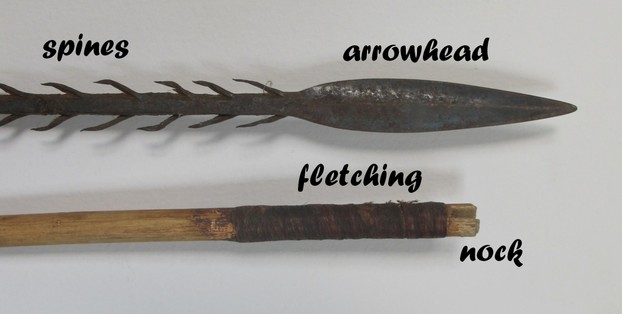
Coming back to the hotel with my bow and arrows proudly in hand, the security guard said that if I was a man, he would not let me in with the "white gun". I guess that is how they refer to nonexplosive weapons. It was, in fact, a bit scary walking around with what was a lethal weapon in the hands of one who knew how to use it.

I wondered if I would be let through the airport with the bow - the arrows fit nicely in my bag, wrapped up in clothing with the arrow heads encased in a pair of my socks. The bow,, however, was impossible to hide. When I got to baggage security check, the guard asked where the "bullets" were. I showed him that they were safely entangled in my clothing and would go in the luggage hold. He let me through, but I could see that me walking through the airport with a bow almost as tall as me was a cause of consternation. When a soldier asked me where the bullets were, I told him I didn't have any. Ethipian Airline was kind enough to put the bow through as an additional piece of luggage at no extra charge, thus relieving me of any further need to explain why I needed a white gun as a souvenir.

Happily, the unwrapped bow arrived in Israel in one piece. It was amusing how passing through Israeli customs with what is considered a lethal weapon in South Sudan did not raise even one eyebrow.

Bullets for the White Gun
Photograph by: Sheri Oz

MyFreeCopyright.com Registered & Protected

Come Join Us Here on Wizzley

Have Fun - Share Your Knowledge

Wizzley

You might also like

Great Small and Useful Gifts for the Adventure Traveler and Hiker

Having had a few adventures in Africa, myself, I consider myself qualified to...

Safari in Nimule National Park, South Sudan

Still underdeveloped, the safari in Nimule, South Sudan, offers a unique expe...

10 Reasons and More to Visit Nairobi National Game Park

I saw a lion, water buffalo, giraffes, zebras, black rhinos, secretary birds,...

Sheri_Oz, on 03/21/2012
 
Thank you! Would you like to post a comment now?
11

I'm sure I will be returning to South Sudan. Want to meet me there for some adventure?


   Login
Sheri_Oz 3 days ago

Hi Honey. You have experience in other parts of Africa - in other totally undeveloped parts? The best thing to do, in my opinion, is go in the direction of Yei. There are villages along the way with kiosks - I love the honey, buy some. You can sit and talk with people there. In my experience, you cannot go into villages without the permission of the chief. You mission colleagues may have contacts in other villages where they may work so going to other places may be part of your trip in any case.

Honey 3 days ago

I'm headed to Juba in July, 1st trip (have been to other parts of Africa). Mission/Humanitarian. I would like to visit villiages outside of the capital any suggestions?

Sheri_Oz 21 days ago

Allergygirl - hope you gave Juba my regards. Afex is a wonderful place to stay and eat. Glad you had a good experience. Maybe we'll meet up there some day.

Allergygirl 21 days ago

Hi Sheri! Sorry I never got a chance to contact you! happy to report I'm now back from juba, and it was a great experience. I stayed at Afex camp, and it was absolutely beautiful!

Sheri_Oz 21 days ago

I can't put my phone number here on the site - go to my profile page and write me via the message button on the top right.

Carmencita 21 days ago

Do you have a telephone number to call I need help for my brother who's in juba.

Sheri_Oz 25 days ago

Susan - you absolutely CANNOT get a visa at the airport in Juba. You must arrive in South Sudan with the visa already in your passport. From my experience, the airline will not let you board without a visa because they just have to take you right back again when you are not let into the country.

Find out who is handling the South Sudan consulate in Dubai and take care of it before you leave. If you can stay in Addis Ababa you can get your visa to S.S. there (it can take a bit of time). The only other alternative is if you are working with an organization, have them meet you at the airport with someone high up in the South Sudan government who can insist they issue you a visa at the airport. However, you will need a letter from that person for the airline to let you board and even then they may not.

Let me know how it goes - and please write from SS to tell me where you are, what you are doing and how you are loving it.

susan 25 days ago

Hi, i am heading to juba on may 6 for a humanitarian mission for 7 months. do you what is the current status of visa now? can i still get it from the airport? my flight is from dubai to juba. I dont have visa prior arrival so im thinking if the airline in dubai will let me in without a visa. thanks

Sheri_Oz on 04/12/2013

Wow - good for you. Write me a private message via my profile page and give me more information about your plans and I'll help you as much as I can.

Allergygirl on 04/12/2013

Hi Sheri! I'll be heading into Juba in April! Excited but a little nervous :) I'm going on business but will be unaccompanied for a portion of my stay. Any tips on staying safe etc? Or what to do as a lone traveller.


Disclosure: This page generates income for authors based on affiliate relationships with our partners, including Amazon, Google and others.
Loading ...
Error!