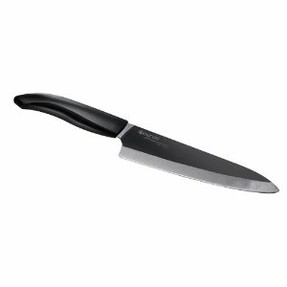
 There's a reason ceramic has been around so long. It's not only easy to make, but incredibly useful as well.
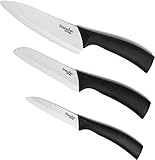
Newer generations of ceramics boast incredibly sharp edges that rarely if ever need sharpening, retaining their cutting edge for many years. They're also immune to rust and many other forms of corrosion, meaning they can last forever with proper care.
They do, however, need to be properly cared for; this won't require extra maintenance, but ceramic is a brittle substance, and ceramic knives are generally not suited toward any sort of task that requires bending the blade at all. It's also a bad idea to drop them on the floor. Of course, it's a bad idea to drop anything on the floor, knife or otherwise, but ceramic knives can chip, damaging the edge and reducing its lifespan. Ceramic knife manufacturers recommend the use of ceramic knives for lighter tasks, such as slicing fruits and vegetables, while keeping the steel knives for heavy-duty tasks.
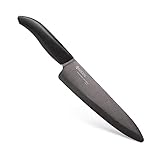
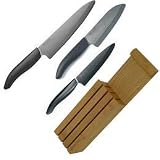
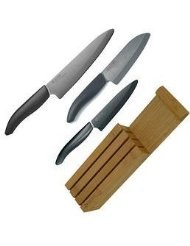
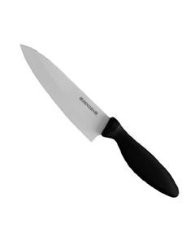 That said, ceramic knives have legions of adoring fans. Major brands like Kyocera or Shenzhen receive universal praise for their permanently sharp edge retention and ease of use, and are backed by proud warranties.
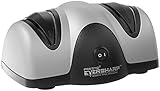
Although ceramic knives do need to be sharpened sooner or later, it's not particularly difficult, with plenty of manufacturers offering honing rods or electric sharpeners to take care of the job. Kyocera will also sharpen a knife for free if you mail it in. With a deal like that, you might never have to buy kitchen knives ever again.


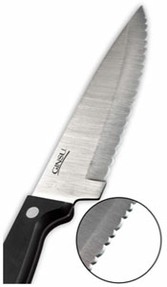 Sadly, there's no such thing as a knife that "always" stays sharp, no matter what happens. Hacking a blade against a granite block is going to do some damage sooner or later, and heavy duty kitchen use will cause some wear and tear pretty quickly.
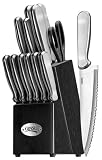
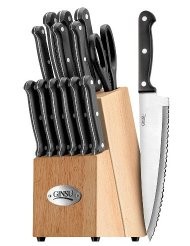 Ginsu made a name for itself back in the 70s, when its now-infamous infomercial made Ginsu a household name, but it's the cutting quality that kept people coming back year after year. After several decades of sales, it still offers its famous serrated edge cutlery at relative bargain prices, though it has also expanded into fine edge cutlery as well.










 Panther Facts for Kidson 05/01/2012
 White Tiger Facts for Kidson 04/29/2012
 Siberian Tiger Facts for Kidson 04/28/2012
 Lynx Facts for Kidson 04/27/2012
Comments
I have had a set of knives for about 35 years now and have never had to sharpen them. They have never rusted. They have never had the handles broken. It was actually a pretty cheap set. It is a set of TriStar knives. They don't make them anymore that I can find. Farberware claims to be TriStar knives now, but I don't know if it is the same knife or not. It also claims to never need sharpening. Which is really true of the TriStar knife. I would put these knifes up against any of the high dollar brands of serrated knives. They were worth every penny I paid and so much more. I just wish I could find another set to be able to give my daughter. I found one, but it doesn't have the shears, which is something she really wanted. I don't know why they don't make them anymore. The only reason they would need replacing is if you lost one. I am pretty rough on knives and I haven't worn them out yet. The best I have found. I also like my Kyocera ceramic knife, but I have to be so careful with it, and I can only use it on "soft" things, so it is of very limited use. Oh well, you can't have everything now can you!