In my Sultan Elementary School 5th grade history class, we were assigned to read two biographies of famous Americans and then write a book report about each. I chose Benjamin Franklin and Dolly Madison.
It took me weeks to read the book about ole Ben. Sure it had interesting quotes and tidbits about Franklin but it read like a police report -- Just the Facts Ma'am! It was great reading just before bed -- put me out like a light.
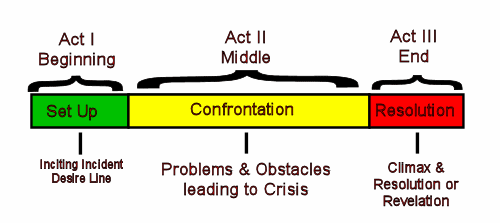
The second book about Dolly Madison, I read in two days. The author told the "story" of her life. It had a begining, middle and end just as a traditional story does. The facts were all there but intricately woven thoughout the story. I absorbed facts about her without even realizing.
I got an "A" on that book report.
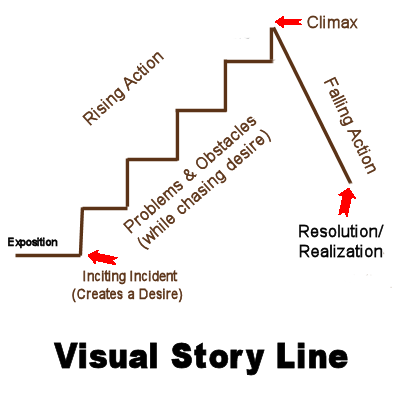
The moral of that anecdote is in order to keep a readers attention you need to write a traditional story with traditional story elements not just the facts -- that's what spreadsheets are for.







 Starting with Nothin' and Ending up with Somethin' | My Journey Onlineon 04/23/2012
 Patio Decorating Ideas | Color Schemeson 03/30/2012
 Patio Decorating Ideas | Tropical Paradise Patioon 03/26/2012
 Patio Decorating Ideas | Tuscan Garden Themeon 03/14/2012

Do you write memoir?
I have read a few memoirs and autobiographies which do not have references or bibliographies. Why do authors omit references or bibliographies in their stories?
Nice tips.
I like how you tie the tips to the needs of the reader and use your own 5th grade story.
Thanks for this. I'm trying to get away from 'just the facts' in my writing and make it more interesting.
A great mini-guide. Thanks.
this is great and I love the suggestions, this is perfect. Happy to have read this.
I love the fairy tale idea! I used to have my fourth graders write a fairy tale when I was teaching. It's simple to see how all the story elements work that way.
How fun that you came up with such a simple solution to a sometimes perturbing problem. Even I was able to get the drift. I don't write memoirs, but I bet I could now.
Awe, Towanda, you and Caroline are two of my biggest supporters. Thank goodness we found each other!
You're welcome Theresa! I fixed the typo (thanks for that) and I am glad you were inspired. Memoir is a wonderful genre and who better to write about your life than you. Go for it!! :D
This should be entitled: Memoirs made simple! Congratulations, you did just that.