
Charlotte Mason and classical homeschoolers rely heavily on narration as an instructional technique. After a reading assignment (either read aloud or read silently) the child retells what he heard or read. But what should a parent do when a child struggles with narration? There are many possible problems that can arise with narration. This article is one of a series of five dealing with various narration problems and how to solve them.

Narration Problems: Narrating is Too Hard
by Jimmie
My child can answer comprehension questions without any problem, but she cannot narrate a passage at all. What can I do?
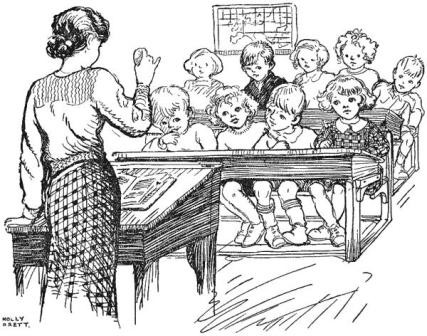 Listening to Teacher in a Traditional Classroom |
Dealing With the Basics of Narrating
Question:
My child can't seem to narrate! If I ask specific questions about the lesson, he can answer correctly. But when I ask him to retell the lesson, he can't do it. What is wrong?
Answer:
First of all, don't give up. Just because he is not skilled at narrating now doesn't mean that he can never learn the skill. He can learn to narrate through practice and your instruction.
Narrating is Simple but Not Easy
It's important to keep in mind that narration is simple --just retell what you read or heard. But narration is far from easy. Some people will say that narration is a natural skill that all children have. Don't all children naturally tell stories of what happened to them? The problem is that not all children can tell those stories skillfully. And tellling about your own experiences is vastly different from telling about a living book or reading assignment.
No, narration is quite complex and vastly different from the comprehension questions of traditional schooling.
Narrating versus Comprehension Questions
Textbooks typically have questions at the end of each chapter. Those are the types of questions that I mean when I say "comprehension questions." Many guides to novels and literature also have these lists of factual questions about the events of the story. Worksheets and workbooks are also along the same lines.
 Usually these comprehension questions and worksheets are written at a lower level of cognitive (thinking) function than narration requires.
For example, take a history chapter on Alexander that Great. (As I'm writing this page, I'm thinking to the history lesson my sixth grader had today.) I read my daughter a narrative account of the great conqueror from a living book. Then I asked her to retell the information. To do so, she had to remember the order of the events, put in the details that are important, and leave out the secondary details (if she so chooses).
Contrast that with my asking her conprehension questions about the reading:
- Who was Alexander the Great's father?
- What was Alexander the Great's horse called?
- What was different about the horse?
- What happened on the day Alexander was born?
- What kept Alexander from entering India?
- What finally killed Alexander?
To answer those questions, my daughter would have to think about only the factual information pertinent to the question. Many of the answers are only one or two words!
Narration is far more challenging than most comprehension questions.
Benjamin Bloom created a taxonomy of thinking in the 1950s which was updated in the 1950s. It has been used by educators for over fifty years and explains the difference between narration and comprehension questions well. Most of the questions you see in a typical textbook or worksheet are at the lower levels of remembering and explaining.
Bloom's taxonomy is below. Study the chart, watch the video, and print out some references.
An Explanation of Bloom's Taxonomy
Contrasting Surface with Deep Learning
Bloom's Taxonomy
(Revised Version of 1990s)
According to Bloom's taxonomy of cognitive processes, the top level is the most challenging one - creating-- while the bottom level requires the least mental effort -- remembering.
| Level | Description |
| creating | design, formulate, write, create |
| evaluating | defend, judge, support, evaluate |
| analyzing | compare, contrast, distinguise, examine, question, criticize |
| applying | choose, demonstrate, sketch, use, write, solve, interpret |
| understanding | classify, discuss, explain, identify, locate, select, paraphrase |
| remembering | define, duplicate, list, memorize, recall, repeat, reproduce, state |
Printable Blooms Taxonomy Charts
Bloom's Taxonomy Printable Chart (PDF)
The six levels of thinking with descriptions and a long list of verbs for each.
Staircase Bloom's Taxonomy
A very attractive chart with the six levels of thinking plus verbs that fit each one.
Higher Order Thinking
Tools to Help You Teach
 |  |  |
| Reading Response Activities With Grap... Scholastic Teaching Resources (Teaching Only $2.0 | Building Thinking Skills- Critical Th... The Critical Thinking Company | Reading Detective A1: Using Higher-Or... Critical Thinking Books & Software |
No Wonder Narration is Hard
To narrate well, you must remember, understand, apply, and analyze (the bottom four thinking levels). A narration can go beyond the text and move on to evaluating. If the narration is written, then the highest level is used -- creating.
It is a far more complex task than merely answering questions on a workshet or at the end of a chapter.
So if your child is new to narration and finds it difficult, do not be discouraged.
Narration is quite challenging. But with help and practice, he can improve.
So Narration is Hard. How Can I Make it Easier?
Practical Tips
Break Down the Reading
Start with shorter sections to narrate. Read a single paragraph and ask your child to narrate that. Then slowly graduate to narrating passages of multiple paragraphs. Finally move up to longer selections and entire chapters. This transition can take months to make. Don't rush it.
Use Narration Prompts
You can make narration feel more like familiar worksheets and comprehension questions by using narration prompts. Encourage your child to go beyond short answers and elaborate with all he knows about the topic. The prompt is just to get him started.
Use Tricks
Note taking can help with narrations. Consider graphic organizers, sketching, outlining. Whether listening or reading silently, encourage your child to make notes about what he hears. Then he can reference those notes as he gives the narration.
Practice Makes Perfect
Like anything, repeated practice improves performance. Be sure to give your child opportunities to narrate every day. Praise his efforts and progress. Be gentle with criticism as you encourage him to continue to improve.
Note Taking and Organizing Information
to help with narrations
 |  |
| The Teacher's Big Book of Graphic Org... Jossey-Bass | Note Taking Made Easy!: Strategies & ... Scholastic Teaching Resources (Teaching |
Reading Comprehension Cubes
Roll the Die and Answer the Question
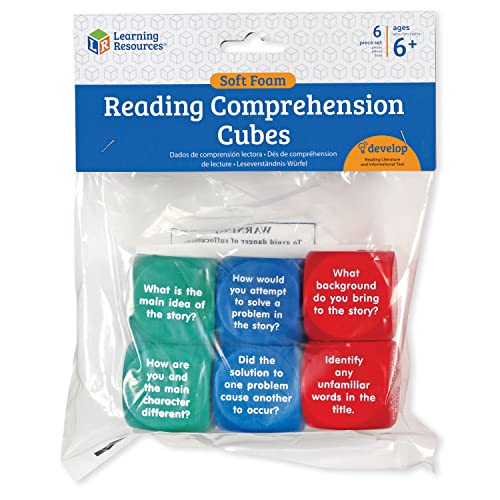 |
| Reading Comprehension Cubes |
Narration Problems
All the Articles in This Series


Updated: 02/21/2012, Jimmie
You might also like
What is Notebooking?Notebooking is a simple but flexible instructional method which many homescho...
Road Tape for Toy CarsConstruct a road for your Matchbox Toy Cars using Road Tape! Not only fun but...
Disclosure: This page generates income for authors based on affiliate relationships with our partners, including Amazon, Google and others.

 Unique Uses for an Over the Door Shoe Organizeron 01/27/2012
 How to Get Pinned at Pintereston 01/27/2012
 Top Five Field Trip Destinations in Memphis, Tennesseeon 01/26/2012
 Maya Angelou Poet Studyon 01/22/2012

Comments
Thank you for the great tips! I am making the leap from using work texts to classical curriculum, and or Charlotte Mason next year. I want to start my soon to be 6th grader narrating right now. This is encouraging and helpful.
Yes, we aren't born with skills, we have to learn them.
I think it's good to have both skills. Narration sometimes seems like a lost art today. :)
I haven't done enough narration with my kids in homeschool. It is a very valuable skill and teaches all sorts of cognition abilities!