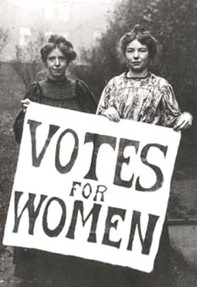
 Today we take for granted that women have the vote. They can also sit in government and become a nation's leader, if the electorate deems it so. There is still fine tuning to be done, but in theory gender is no longer a barrier to full social inclusion and responsibility.
This was not so in 1912. In fact, it was due to the efforts of the campaigners then that a series of events were set in motion, which led to universal suffrage now.
Allowing women to vote in elections was not only a radical idea, but a downright divisive one. It was akin to, say, the abortion or gay marriage debates occurring in the USA in 2012.
It wasn't a simple matter of 'yes' or 'no'. The very notion of it turned some people's stomachs. It seemed ungodly and against the natural order of things! Don't assume either that this was the reaction solely of men. The majority of women were also appalled at the idea that they should be anything but the 'weaker sex'.
For those in support, there were three categories:
The Suffragists sought to enact change through the men in power. They stated their cases in quiet interviews, with calm reasoning and diplomatic persuasion. They didn't get very far.
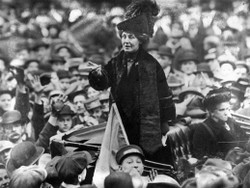
The Suffragettes would probably be called anarchists or terrorists today, as those are the media buzz-words to sideline any loud protest group. They used shock tactics, like chaining themselves to railings, breaking into the House of Commons or going on hunger strike. They included Emily Wilding Davison, who was killed in the course of protest.
Then there were people who agreed with the idea of women being able to vote, but who were repulsed by the aforementioned groups actually campaigning for it. These armchair intellectuals reasoned that the cause was right, but the reality was unseemly.
This was a time of rigid social order and very set rules on how one should behave in public. Many would rather die than be responsible for a breach of etiquette.
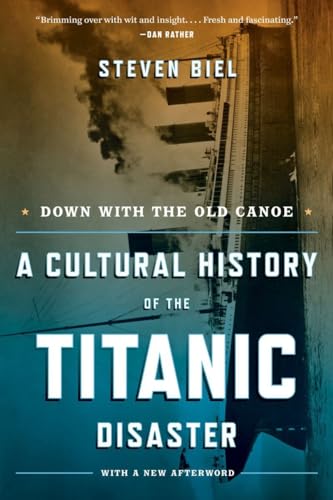
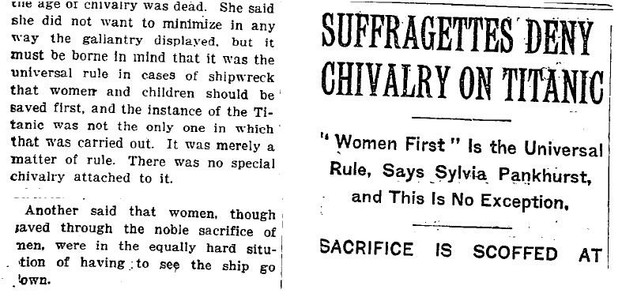
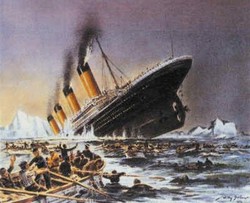
As the Titanic started to sink, the majority of those on board got their chance to actually do this. 1513 people perished in the disaster. Of that number, 89% were men.








 St Tydecho's Churches in West Waleson 09/03/2014
 Goodies for an Outlander Premiere Partyon 03/06/2015
 Holocaust Memorial Day Interview with Rainer Höss, Grandson of Rudolf Architect of Auschwitzon 01/24/2015
 Romantic Valentine Gifts for an Outlander Fanon 01/16/2015

Comments
Good one, Jo. No JT, don't bother to respond to that one. Modern day Suffragettes who still fight for the rights of women have you beat now. Do something radical. Unusual for a man, admit defeat and Just Troll off. Please-and-thank-you? With the aid of a size 6 Doc Martens boot if I have to? (No, on second thoughts, you might enjoy that...) These women stood up for my right to be treated like a human being, not a piece of meat. So I will honor their memories by recalling their efforts when I stand up to speak back to the likes of you.
MEN EXPLAIN MARRIAGE TO WOMEN
Woman:
“What is marriage?”
Man:
“Marriage is a system where you work to support me so that I can stay home and raise the kids.”
“When I get tired of you, I divorce you; I take your house, your car and all your money. I walk away with your kids and force you to pay me child support and alimony. When I get done fleecing you, I have everything you own. You have nothing left but the bra holding up your tits.”
Woman:
“What’s in that for me?”
Man:
“Financial rape, my dear.”
https://www.mikechurch.com/transcript...
Figure this one out.
John - This was 1912. Men had automatic custody rights over the children.
I know that you're trying to illustrate a messed up American custody system today by turning things on their heads. But it only actually works if the situation in 1912 mirrored that of today.
TITANIC LOGIC
Woman:
“Since society discriminates in favor of men by putting them on the life boats first; since it gives fathers automatic custody and forces their mothers to pay child support and alimony and since women have to fight for their country and men don’t, women should have all the jobs to equalize this discrimination in favor of men.”
Molly Brown was really good at the pragmatic responses. She spoke as they all should have at the time.
It was a thorny issue to be sure.
Nice page, Jo! I loved Molly Brown's take on the issue of women and children first.
If you are going to use alleged suffragette hypocrisy on the Titanic against women, you must remember the gospel statement you must take the log from your own eye before you take the splinter from other people's eyes.[Matthew 7, verse 4] The log in the male eye is that over the centuries men have claimed authority over women and seriously misused it to oppress the female sex. The male scorecard contains a long list of negatives and discredits, such as the vast number of rapes, women abandoned with babies and wife beatings, let alone economic oppression that saw women excluded from the professions and paid them lower rates than men for the same job.Men have used their greater muscle to oppress women. Yes, there are some feminists who are hypocritical and at times unfair to men, but there is also a vast number of women misused by men and often deeply hurt by the way in which they have been treated.
John, if we want to select cases, why do you not select Edith Cavell, who ran an escape line for allied troops. Think of the heroic nurses who have cared for injured men on battlefields. Yes, women are not the most effective warriors [on the whole] but they can be fully competent and have often made great sacrifices for their cause. Face it, fighting is a skill, and even if we have it, we know that it is a skill that will one day let us down and we will be beaten by a tougher, or younger man. True fighting men know this, but caring is a skill that will never let you down. I remember how my mother nursed me for months when I was dangerously ill as a child. She was too weak to fight anyone, but her care for a sick child was magnificent. Respect and love women for their wonderful skills.
I am going to approve this one, John, as it is actually on topic.