

Understanding the Theology of Ufology
by Drtruthman
Defining and understanding the five most common methods of Theology in an attempt to better understand Ufology.
Bridging the gap

As stated in my introductory article, this Wizzley site will be dedicated to attempting to bridge the gap between Ufology and theology.
Ufology is of course the study of unidentified flying objects with everything associated such as aliens, crop circles, abductions, etc.
Theology is the study of God. At first thought, this would seem to be a very simple thing.
Most people assume Theology is Bible study but it is so much more.
There are five basic Theological methods which will be covered in this article and utilized in future articles to identify the association with the current phenomenon of Ufology.
The five basic forms or methods of theology are: Form criticism (also known as form critical analysis), Didactic criticism, Dispensational Theology, Historical Theology (closely similar to Dispensational theology) and of more recent decades, Cosmic theology.
Each of these forms of Theological study have their own unique approaches in an attempt to understanding God, His work in the universe, His communication with man, salvation and the culmination of time and eternal life.
An explanation of the Five Theological Methods:
- Form Criticism (also known as form critical analysis) – Simply put, this is an attempt to study God and His work from a literary perspective by “objectively and critically analyzing” the form in which the scripture was written. Basically analyzing scripture as literature.
- Didactic Criticism – Dissects, teaches and reduces biblical content to its simplest and most logical (and not necessarily obvious) interpretation. With this method, what you see is not always what you get. This is often used in non-scriptural poetry as well.
- Dispensational Theology – A mid 19th to early 20th century theological method regaining strength during the cold war era; made popular by Pastor/theologians Lewis Sperry Schaeffer and C. I. Schofield. It usually accepts a six thousand year age of the current creation or re-creation of earth while allowing for gaps in scripture of unexplainable historical events. It also breaks the Bible down to either three or seven parts with each portion labeled as a particular age; e.g. age of creation, age of grace, age of sin or darkness, etc. (Closely akin to this is “Covenant Theology” which is not relevant in our study here. Covenantal Theologians organize all history and theology around several covenants, or arrangements between God and humans.)
- Historical Theology – Simply looks back through history and attempts to identify God working in and through man to accomplish His goals. Problems exist here because the history used is often limited to the Judeo-Christian West. There is nothing really special here and no labels are given other than those normally associated with history.
- Cosmic Theology – This is also known by many other names such as Contemporary and Scientific Theology but it is all basically the same and usually identified with a better understanding of prophecy; although of recent, it has become increasingly identified with associating Ufology with Theology. Although used by the Unitarian Church for over half a century, evangelical Theologians such as Hal Lindsey have unintentionally utilized this Theological method to bring “new light” to traditional prophetic interpretation. Cosmic Theology basically takes man’s contemporary knowledge and mind set and looks backward in time attempting to describe in a new light what the Biblical writer might have witnessed or been trying to say or describe with his limited knowledge.
Although nearly all of these theological forms appear to be vital to current theological study, the three most often used with regard to Ufology are Form Criticism, Dispensational and Cosmic Theology.
Cosmic Theology, is the predominate Theological method most closely associated with the study of Ufology because of its attempt to utilize current knowledge and look backward in time attempting to describe in a new light what either ancient man or the Biblical writer might have witnessed or been trying to describe or say.
It is this “Theological method” which tends to bridge the gap between Theology and Ufology.
A perfect example is Moses and his burning bush experience as described by the Biblical Old Testament:
Utilizing our contemporary knowledge, is it possible that what Moses saw and experienced was alien in nature and/or a communication probe?
From a purely semantic argument, the answer is an unequivocal YES.
What Moses had seen was NOT of this world, whether spiritual or alien.
Also, one of the often over looked aspects of this story is God's response when Moses asked, "Who are you; who do I say sent me?" and God responds, "I am that I am", tell them "I Am has sent me".
Although there are many varied interpretations of this translation (and this writer has six years of seminary and college study of the Hebrew language), MOST linguist agree that one of the over all interpretations here is either "It doesn't matter who I am" or "It is none of your business who I am".
When I first began my study of the Hebrew language I found this absolutely amazing and still do today.
Why would a GOD who wants us to know Him personally and follow Him, NOT want us to know WHO He was and WHY would His identity not be any of our business?
This is not meant to dismiss God, his power, or God’s intent (or plan for man) and purpose to speak to man.
But for us to allow ourselves to limit the way God works is also to limit the ability and power of God.
©Copyright 2012 Dr. Lee W. Outlaw III
Ancient Secret
Of Nibiru Vatican Telescope
Burning Bush
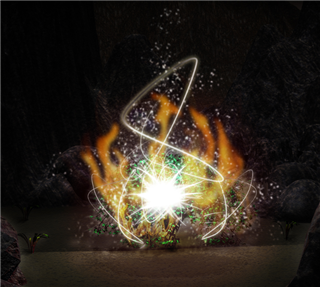 Burning Bush |
Apollo 16 lander Glows
Is this similar to Moses sighting?
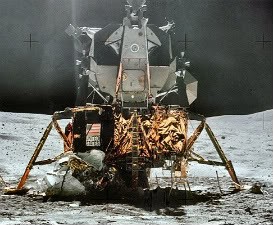 Burning Bush or Space Probe? |
Mars Rover
 Mars Rover - Is this what Moses saw? |
What do you Believe?
More Writing by Dr Lee Outlaw:
- Examiner.com
Get the latest news and information on Brownsville Political Buzz and Christianity, including local information. - HubPages.com
Contributing articles and poetry about religion, Christianity and life.
- Drtruthman Counseling and Opinion Blog
A Blog on a variety of topics including Politics, History, the Paranormal and Counseling. Counseling will be the primary focus. - One Outlaw's Opinion Blog
A Christian information and theological blog. - Dr. Lee W. Outlaw, Author Website
The latest information on Dr. Lee Outlaw's current and on going writings, work by author friends and recommended reading. - One Outlaw's Opinion Website
A Theological and Christian Information Website. - Dr Lee Outlaw's Writer's Page
A FaceBook page dedicated to Writers and Authors. - Books Authored by Dr. Lee outlaw
- The Prayer Page
Dr Lee Outlaw's Prayer Page for posting prayer requests which are instantly forwarded to thousands of prayer warriors via Twitter. - Writing.com
Writing.Com is the online community for creative writing, fiction writing, story writing, poetry writing, writing contests, writing pages.


Videos on Amazon
 | Ancient Aliens: The Complete Seasons 1-6 [DVD] ANCIENT ALIENS-SEASON 1-6 GIFT SET(DVD) (24DISCS/WS/ENG/ENG SDH/2.0 DOL DIG |
Books by Deborah Brooks-Langford
 | My Heart I GiveOnly $11.75 |
Books by Ellen McKinney
 | Santa Fe Son Past memories can be wonderful, but sometimes sad for Corinne her world was rocked by the seemingly senseless tragic murder of a close and lifelong friend. The murder ... Only $35.56 |
 | Best of Intentions Guy Hewitt is a decorated undercover police officer, who after suffering the tragic death of his partner, is convicted of his partner's murder.Guy is innocent of this crime. ... Only $20.95 |
 | A Rose for Liliana Liliana Jacobs the city's Assistant District Attorney is gaining a reputation as a winner in the courtroom. But on a personal level all the men in her life seem to have ... Only $20.95 |
Books by Susan Joyner-Stumpf
 | Grief Shards and Other Remains I have been writing since a young child. Coming up abused like I did, I looked toward writing as My Savior, it literally saved me. There, I was transported to another world ... Only $34.95 |
 | Tortured Light I am considered a dark poet. I am often channeled from spirit animals or people trying to get a message through—hence, this explains my often uncanny ability to be able to ... Only $29.95 |
 | The Ragdoll Chronicles: Poems and Short Stories What does Ragdoll Chronicles mean, you ask? Growing up abused, the word “ragdoll” has, sadly, much symbolic meaning for me, i.e., “lifeless as a ragdoll,” “beaten like a ... Only $27.95 |
 | Crimson Whispers Crimson Whispers is my Third Book of Published Poetry. Welcome to my world of darkness; a world where abuse was left behind and I see the light of being a Survivor. Also in ... Only $11.99 |
Susan's Latest Book
 Language of Moon By Susan Joyner-Stumpf
You might also like
My New Wizzley PageI found a wonderful new writing site called WIZZLEY. I will utilize my Theolo...
Abington Fireballs - UFOs, Meteors or Hoax in the Bridgwater T...Abington is the northern tip of the mysterious Bridgewater Triangle in southe...

 My New Wizzley Pageon 01/06/2012


Comments
Okay keep me informed.. ... I am not that smart.. LOl I just write... thanks Dr. Lee
Thanks for taking the time to read and comment Andy. This has always been one of my loves all the way through Seminary and Grad School and I think there's so much we all need to learn about our past. I am amazed when I watch almost any of the programs on this topic or read books on it that there is always an emphasis by the author that the scriptures from every culture are involved. I think this study will only make us realize and appreciate the might and majesty of the God with the big G and how his creations are greater than any of us can even imagine. Thanks for reading and commenting.
Thank you for offering your unique and well-informed insights into the discussion of this topic. I'm very excited to read more of your articles and learn about the relationship between theology and ufology!
Don't worry Debbie, it will all become clearer as I take all readers on this interesting journey. By the way, Planet X refers to the 12th planet referred to by the ancient Sumerians who claim that ENOCH of the OT was the father of their nation and culture. Astronomers refer to Planet X as the "missing planet". You don't have to feel dumb there is allot WE all don't know about this, but it should be fun. Thanks for the read and the comment.
Planet X? tenth planet?
Well I feel dumb right now.. LOl.. I don't understand Ufology I hardly understand theology.. gee..
Thank you Susan. As usual wonderful comments. Sorry about the wrong book. I am using a new process where I just list the authors and Amazon does the rest or the topic and Amazon does the rest. I thought it would help us both with you selling more books and me getting credits from Amazon for "clicks". I will remove the one not yours. Thanks again for your continued support.