

Why Do Some People Hate Shakespeare?
by WiseFool
Shakespeare prompts strong reactions; people either love him or loathe him. But why do some people hate the world's most famous playwright?
Confessions of a Shakespeare Lover
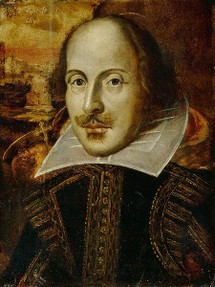 As one of the people who adores Shakespeare - so much so, had I been around in the late 16th and early 17th centuries, Anne Hathaway and I would have been fighting - I find it difficult to understand how some can have equally passionate, but completing opposing emotions to his work.
Nevertheless, they do. And I would venture that there are more people that hate Shakespeare than there are that love him. This begs the question: why?
Having known many Shakespeare loathers in my life, (some of whom were studying literature or theatre…or both) I’ve discovered there are many reasons for their hatred of the Bard. Some of these reasons are more articulate than others. However, I believe they can be whittled down to three.
Reasons to Hate Shakespeare
- You believe that Shakespeare’s plays are highbrow and elitist
- You don’t understand a single word he wrote
- Your first experience of Shakespeare (at school) was mind-numbingly boring, so you’d rather stick pins in your eyes than read any of his work again
Is Shakespearean Theatre Elitist?
This notion, actually, couldn’t be much further from the truth. Most of Shakespeare’s work was performed on the south bank of the Thames; a pretty rough ‘n’ ready part of London. The Globe theatre was surrounded by brothels, pubs and bear-baiting pits. Put simply, it was the Las Vegas of Elizabethan and Jacobean England.
It can’t be denied that Shakespeare enjoyed royal patronage and was a favourite of both Elizabeth I and James I. However, he enjoyed a large fan base, which included the ‘great unwashed’ as well as monarchs.
Of course, the amount of smut in Shakespearean plays also points to the very lowbrow nature of much of his work. The Porter’s discussion of alcohol-fuelled impotence, from Macbeth, for example:
“Lechery, sir, it provokes, and unprovokes; it provokes the desire, but it takes away the performance: therefore, much drink may be said to be an equivocator with lechery: it makes him, and it mars him; it sets him on, and it takes him off; it persuades him, and disheartens him; makes him stand to, and not stand to; in conclusion, equivocates him in a sleep, and, giving him the lie, leaves him.”
And if you need any more evidence of Shakespearean filth, you can find it on almost any page of The Taming of The Shrew.


Is Shakespeare Impossible to Understand?
To me? No, Shakespeare isn’t difficult to understand. However, I didn’t always find it easy to follow those sometimes archaic, but beautifully wordy prose.
I think there are two very simple tricks to understanding Shakespeare. Firstly, like anything in life, it takes a little practice. The more you read, the less peculiar the language and style will seem.
The second approach is to not bother reading it at all. Watch it instead. Whether it’s a live theatrical performance or a film, it will start to make a lot more sense when you see the words brought to life. Remember, Shakespeare’s plays are just that: plays. They were written to be put on stage not read in an English classroom.
Do Schools Ruin Shakespeare?
Did you know that 50% of the world’s schoolchildren study Shakespeare? That’s a lot of people who are scarred for life and will never again touch William Shakespeare’s work; not even with a bargepole.
Do I believe that Shakespeare shouldn’t be taught in schools? No, of course not. He is an important part of our literary and cultural history. However, I do have a problem with the way that Shakespeare is taught by some teachers.
I strongly believe that kids need to be introduced to Shakespeare by someone who has endless passion for his work. Unfortunately, not all English and/or drama teachers possess this enthusiasm.
As already mentioned, the plays were not written for the purpose of being read in a stuffy classroom. They were meant to be performed.
My point is, they’re plays; they are meant to be played with!

Can Shakespeare Be Redeemed?
If you hate Shakespeare for any one of the reasons above, I urge you to give him a second, third or even fourth chance.
Bear in mind, there’s a very good reason that, almost four hundred years after his death, Shakespeare’s work is still so popular. And it is that his plays deal with themes that are timeless.
Moreover, they are still immensely entertaining; filled with love, passion, ambition, betrayal, suspense, madness, lust, depression, violence, death, psychology - all the things that audiences crave in modern drama.
Still not convinced? I would encourage you to see a Shakespearean play. If you don’t fancy the theatre, why not look for one of the many DVDs available?
 |  |  |
| Macbeth / McKellen, Dench (Thames Sha... | Henry V | Twelfth Night |
You might also like
Book Review: By Its Cover, a Commissario Guido Brunetti Myster...By Its Cover, the twenty-third Commissario Guido Brunetti mystery by Donna Le...
The Discworld Evolution of Granny WeatherwaxTerry Pratchett's Discworld is one of the most successful fantasy series of a...


 How to Avoid College Debton 07/31/2014
 Was Charlotte Bronte Jealous of her Sister Anne?on 07/15/2014
 Whose Side is Cancer Research UK on?on 07/06/2014
 A Plot Summary of Electra by Sophocleson 07/05/2014


Comments
I'm watching a great production of Hamlet these days. This one, perhaps because I saw Hamlet in English several times, is easier to follow. But I have to say that some plays are difficult: not on the page, but on TV, because the actors speak the lines very fast. And Shakespeare loads them all with meaning, so you really have to grasp each word.
My first experience with Shakespeare was reading his plays. Slowly, with lots of searches in the dictionary at first. Then, from one play to another, I started following his English more easily. But it's not just that: seeing the words on the page and reading them in my own inner voice was wonderful. I like to do that with all plays (by Shakespeare or other authors). I like the theatre or TV plays as well, but they can't replace my own unmediated experience with them.
Hello Carmel, I don't suspect many school kids around the world object to studying Shakespeare for those reasons.
But, humour aside, that's a point of view you're welcome to.
My point of view, if you're interested, is this: the question over whether he wrote all the plays is, of course, hotly debated. As far as I'm concerned, there's no solid evidence to suggest he didn't. There might be questions about his level of education and whether he'd seen much of the world beyond Stratford and London, but the fact rumblings about authorship didn't begin until the mid 1800s seems crazy to me. If Shakespeare never wrote a thing in his life, why didn't someone say something earlier? If you're interested in reading more of my thoughts on the authorship debate, you can read them here: http://whatsitallaboutshakespeare.blo...
As for being a Tudor kiss-ass, writing Richard II at a time when plots were afoot to displace Elizabeth, and having an uncensored version of the play performed for Essex's rebellious crew could have got him beheaded. So, I'm not sure he was completely sycophantic where the ruling house was concerned.
And I think that perhaps you're looking at Richard III too simplistically. On one hand, keep in mind he is the tragic hero of that play: Richard is the HERO - he's not just a 2D black-capped villain. Shakespeare didn't have to write the play like that. He could have put Henry in the centre of the plot, but he chose not to.
On the other hand, think about what the play has done. Would the whole world know who Richard III is if it hadn't been for Shakespeare? I don't think so. I think he would have been forgotten in the back pages of history. There wouldn't have been so much media interest in the excavation to find him. Heck, there might not even have been any interest in finding him at all.
Is he portrayed unfairly in the play? Very probably. But has Shakespeare done Richard wrong? Maybe...but, then again, maybe not. Perhaps, in the long term, he's done the last Plantagenet king a huge favour.That's something I've written about here: http://wizzley.com/did-shakespeare-ha...
First of all he didn't compose many of the works published u nder his name. He was an operator, a thief, and an ---kisser to the filthy Tudors. To bad he can't be sued and hanged for defamation of character of England's last lawful King, Richard III.
Hi, Sharilee! Really glad that there are people out there teaching Shakespeare with enthusiasm and prompting an interest and, hopefully, love of the Bard. As you so rightly point out, it's not knowing the meaning of every single word that matters. It's all about getting a sense of a play as a whole, then the rest starts to fall into place. Really pleased that you've had experience and success in teaching Shakespeare in a less rigid, 'classroomy' way.
Wisefool, I used to teach Shakespeare and I loved it. I have a passion for helping teachers teach it in a way that is engaging and fun. The main idea when teaching Shakespeare is that they get the "gist" of it, the story. Every single word? Not that important.
When I was teaching up North, we did a project with a theatre troupe that specialized in working with the class in producing an abridged, fun version of a Shakespeare play. I did this as a unit and it was part of their course. The whole school watched and I am pretty sure we created some lifelong Shakespeare fans that day.
This is a great article and I am glad you are encouraging people to "try him again!"
Hello Chihuahua. Yep, I agree. You wouldn't sit down to read the screenplay of Die Hard - well, you might, but it wouldn't be the same. However, I wouldn't even go as far as to say you have to go to the theatre to see Shakespeare. There are plenty of really good film and TV productions that are available on DVD and, usually, readily borrowable from a library. As far as getting kids interested, dragging them kicking and screaming to a theatre ain't going to help. So, I say, let's make Shakespeare as accessible as possible. That doesn't mean I condone dumbing it down, of course!
Thanks Carole, I couldn't agree more. It's interesting to me that, although as you mentioned, on the face of it, some of his work is sexist, racist or anti-Semitic, the plays can also be viewed in a very different way. Many people consider Shakespeare to be a proto-feminist and almost all of his 'outsider' figures are dealt with in a reasonably sympathetic light - we feel empathy for Othello, and Shylock can be viewed as a victim just as readily as a villain. In many ways, Shakespeare was ahead of his time.
I like Shakespeare i think it is wonderful reading yes it is hard to understand for some people i admit, but i don't think you have to be able to understand every word to enjoy his plays as long as you know the story. And the plays were also written for the stage and are still performed to this day and many people still think that his plays are worth watching. Shakespeare i think wrote the plays for the common people before being under the patronage of the Queen of England Elizabeth the first and staging plays at her court. My first experience of Shakespeare was through Laurence Olivier's film of Richard 111 which i saw on TV in the early 60's and i was instantly a fan of Shakespeare's and Laurence Olivier's. The diversity of Shakespeare's works regarding the themes of the plays are still relevant today i think although some of his stories can be seen as sexist or racist (ie) Othello for instance and his Richard 111 i think is more Tudor propaganda than real historical fact. I still think Shakespeare is worth reading or going to see performed on stage so give it a go i am sure you will learn something i have since discovering his works.
Hello Terri, very glad to hear that you had a positive experience learning Shakespeare. I have to say, it was the same for me. I had an English teacher who was incredibly passionate and it was infectious, but I know it's not the same for everyone. It is amazing, when you think about it, that one man had such a huge influence over our language, culture and all forms of drama. I love it!
I grew up in the Cotwolds and we were taken to see the Shakespeare play we studied - Macbeth, I remember it vividly. We visited Anne Hathaway's cottage too, I guess that helped put a time and place to Shakespeare. I just find it fascinating how much of modern English has its roots in Shakespeare. (And I'm a techie with a very limited appreciation of literature!)