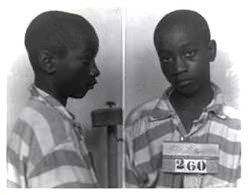
 It has been nearly 70 years since George Stinney Jr was executed, but his remaining siblings still sound raw with emotion when they talk about it. In amongst the facts, statistics and human rights issues, it's often difficult to get a sense of the boy at the center of it.
"(George) was like my idol, you know." Katherine Stinney Robinson told Sound Portraits.
She had been with him when they encountered the girls. She said that Betty June and Mary Emma had cycled by the Stinney house, looking for may pop flowers. Katherine and George told them that they didn't know where the flowers grew and the girls went away.
Mrs Robinson went on describing her brother. "He was very smart in school, very artistic. He could draw all kinds of things."
This was a view shared by her elder brother Reverend Charles Stinney. In the interview with W.E A.L.L B.E, he explained that George had then returned indoors to complete his homework. He'd been smart in school and that was a great help to their mother, as he could assist her with reading items useful for their household. Rev Stinney continued, "He did a lot of drawing. He was pretty good at that also."
Rev Stinney 'wasn't even 11' on the day that George was arrested for murdering the two girls. He admits to not understanding precisely what was going on, especially since he had been out of the house at the time. Katherine had been home, but she was still none the wiser. She talked about men in suits coming and taking her brother. They gave no reason.
There was barely time for any of them to react, before they were bundled with their parents and other siblings onto a train to Pinewood, South Carolina. They only had the clothes in which they stood, when the family arrived at their maternal grandmother's home. A neighbor had assured them that it was the safest thing to do. She doubted that any harm would come to George. It just didn't seem feasible.
 That was no comfort to Amie Stinney though. Mrs Robinson recalled that their mother wouldn't stop crying. Her 'little eyes (were) all swollen', as she prayed endlessly for God to change the minds of her son's captors. She kept repeating over and over again that her son didn't do it.
Their brother's body was sent to them in Pinewood, where he was buried in a family plot close to his grandmother's home.The Stinneys were devout Baptists and took some comfort in the fact that George was now out of harm in Heaven. After his execution, the family leaned upon their faith to cope with his loss.
It took months for his father, George Stinney Sr, to find work, after which he was able to afford the train fare back to their former home. He was able to recover some of their possessions and bring them back to the family.
Rev Stinney simply called it 'a hurting thing'. Both noted that, once George was dead, neither of their parents would discuss it. The children were raised not knowing exactly what had happened, beyond the fact that their brother was dead, until they were adults themselves. But the silence didn't mean that he was forgotten. Their parents never got over it.
Mr and Mrs Stinney are both gone now too. Only one of their four sons and two of their three daughters remain to try and clear George's name. They've both stated outright that no-one in their family ever doubted George's innocence. Any effort to exonerate him has their blessing.


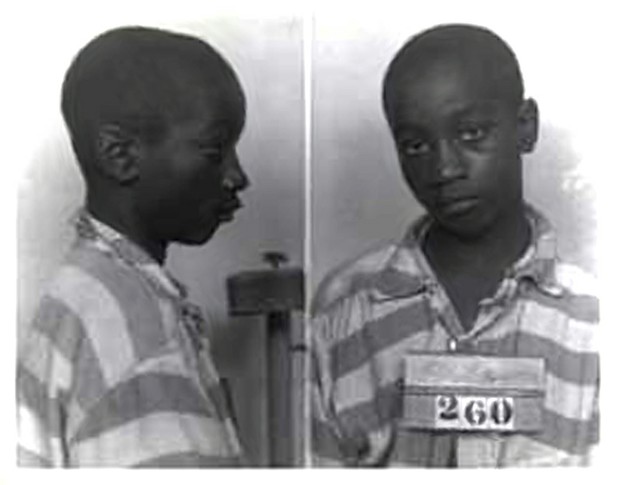
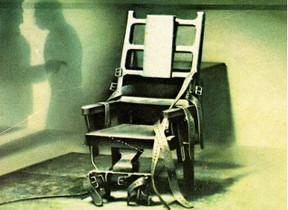
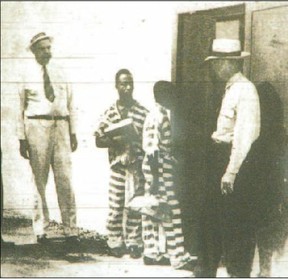 George Stinney Jr was held in isolation, until he went to court a month later. There his court appointed lawyer Charles Plowden didn't attempt to prove his client's innocence. Instead, the whole case rested on whether a fourteen year old could be held accountable for his actions.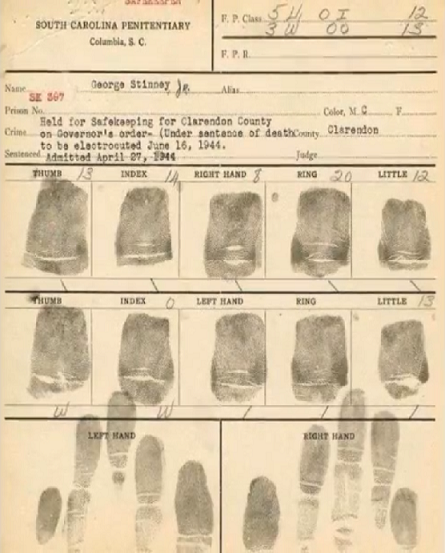



 St Tydecho's Churches in West Waleson 09/03/2014
 Goodies for an Outlander Premiere Partyon 03/06/2015
 Holocaust Memorial Day Interview with Rainer Höss, Grandson of Rudolf Architect of Auschwitzon 01/24/2015
 Romantic Valentine Gifts for an Outlander Fanon 01/16/2015



Comments
Ruth - I received several texts telling me about this and I cheered. I was nowhere near a computer at the time to share it too, but I'm glad justice was finally done. I just wish it hadn't been so late.
Chunkyd - I really can't imagine what you experienced back there, though what I can imagine disturbs me no end. I agree fully that you have to understand history to grasp the present, and predict the future. What I'm seeing on the streets of Ferguson, New York and other places is seriously perturbing. Though I'm hoping this is merely things coming into the open, and therefore a precursor to ending such tactics for once and for all.
JustMe - I've been an Amnesty International activist for decades, I'm very well aware of what happens in various countries. Are you asking me to report back awareness raising everywhere? Here you go: http://wizzley.com/authors/JoHarringt...
Although bittersweet, it was good to learn that on December 17, 2014 South Carolina Judge Mullen overturned the 1944 conviction of George Stinney Jr.
In order for one to understand history, one must know history. Stories like these are common place in many part of the USA> I happened to be born in South Carolina and know of the atrocities of being an African American in the 50's and 60's. There was no interest in justice or fairness. It is a sad state to have to posthumously exonerate a man for a crime that he did not commit but in many peoples eye, the jury found hum guilty so that means he must have been guilty. Ignorance should not be bliss. Disenfranchised in the 20' 30'. 40', 50's and into the 60's. Instead of making progress we are repeating the same mistakes we have mad before. Why, because of the color of ones skin, and not the content of their hearts!
Beyond tragic and sad for sure BUT if you people think this only happens in America and to black kids and only to black men, you're beyond naive.
Do any of you have ANY idea what kind of "justice system" exists in other counties?
Seriously, find yourself behind bars in Mexico, Thailand, Turkey, China or Africa and get back to me.
There is this. It's more for the look of the thing than anything else.
It is a darned shame that the powers that be don't agree with the Universe. And it's even more shameful that you are correct that it must be a judicial act rather than a political one. Although, many times the two are in the same pockets, sad but true.
Consider me jumping up and down in full agreement with your opening statements, and the second paragraph too.
I hadn't considered that about the interviewer here. What you said about Rev Stinney's attitude curing the world's ills mirrors something that Eva Mozes Kor said yesterday on Reddit. Here http://www.reddit.com/r/HaShoah/comme... and here http://www.reddit.com/r/HaShoah/comme... Funny that the same suggestion, in two separate places, should come up within a day of each other. Perhaps it's the universe agreeing.
I'd love to see President Obama simply wipe George Stinney Jr's record clean. But there will always be those who say it was a political move. It needs to occur in a court of law, so it can be a judge saying it with all due regard for the law. Sad, but still the world in which we live.
This tragic loss of the lives of three children is a horror story for them and their families. At the forefront in my mind is that a child should not be executed, period. Further, a child should not be executed as an adult for what they were found guilty of as a child.
But of course, there is also the prejudice that even the Rev. Stinney mentioned in his interview, prevalent back then, and that nobody could do anything about it. It was accepted as a fact of life. So sad. Yet, still, so inspiring that the Rev. Skinney has no hatred, never has, and says his family doesn't either, then or now.
This brings up something else, on the flip side, that concerns me. I do not feel it is right when others, outsiders for lack of a better word, having their own agenda, maybe even their own hatefulness, attempt to instill that in those who have come to terms with it in their own forgiving and accepting way. And in listening very closely to the interview with the Rev. (twice) I do believe the interviewer was trying to stir something up that is not in that man.
Don't get me wrong... I believe there is not a thing right about what occurred, about the deaths of any of these children. I also believe those wrongs cannot be cured with hate. Honestly, the attitude held by the Rev. Stinney is more likely to cure what ails the world where racism and hate are concerned.
Reopen the case? No. For crying out loud, let the man in the White House wipe George Stinney's record clean without further ado. He takes power in his hands when it's for his agenda, so why not for this boy's name... (My apologies for the book I've written on your space.)