
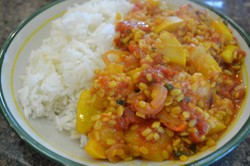
"Indian cuisine" is truly a catch-all name for a wide variety of different regional styles of cooking and ingredients, given the vast size of the Indian sub-continent. Indeed, the country of India itself is the seventh largest in the world, so it stands to reason that there is much diversity in the food prepared throughout the nation.
In the broadest of terms, one can divide the country in culinary terms into Northern and Southern styles. Northern Indian food can be characterized by a variety of foreign influences due to centuries of invasions and contact with other cultures. For example, the Persians brought pilafs and rice dishes to India; the Portuguese introduced vinegar which became a critical ingredient in Vindaloo curries. The cuisine of Southern India shows much less foreign influence, but features a predominance of locally grown fruits and vegetables and vegetarian cooking. Dietary restrictions due to various religions play a part in the local cuisines of other regions of the country as well.
Very little special cooking equipment is required for Indian cooking; most Western chefs will have what they need on-hand already, or at least suitable substitutes. You will certainly need a good heavy-bottomed skillet, and a mortar and pestle for grinding fresh spices. What can be a little more tricky is finding some specialty ingredients, not always available in Western supermarkets but readily available on-line or at Indian grocers. I'll talk about some of those ingredients later on this page.







Comments
No comments yet.