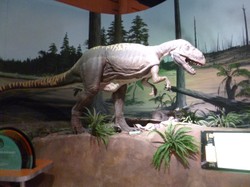
Yesterday evening I became a child again as I waded along the shoreline at Brook Bay on the Isle of Wight searching for dinosaur remains or fossils, a rediscovery of the magic of the ‘other’. Excited children and adults queued up to show our guide the finds we had collected, stones that may have been fossils, shells that may have been ammonites, and odd fragments that could have been crocodile remains. Well, yes, could have been but were not, despite the fact that crocodile remains have been discovered here in the past. The walk of discovery was led by one of the most expert guides I’ve ever come across, who shepherded her party of 15 people across the shallow sands of the bay with cheerfulness and wit.
Dinosaur Island
Apart from Dinosaurs, the Island has a remarkable diversity spanning the whole of the Cretaceous period and the shingle foreshore at Brook Bay is one of the best places to find dinosaur fragments, especially after severe storms when more sections of the cliff walls are uncovered.
There are around 15 species of dinosaur currently recognised on the Isle of Wight with more mysterious remains yet to be determined. Over 120 million years ago the environment on the Wight was just right to support a rich biodiversity, from the smallest bacteria and insects living in ferns, cycads and large conifers, to the giant dinosaurs and soaring pterosaurs, the large meat-eating dinosaurs like Neovenator and Baryonyx being at the top of the food-chain.
Comments
MaritravelJul 27, 2014
DerdriuMarrinerJul 26, 2014
I hope that the archaeology is able to go forward thanks to the revenue influx from visitors. Funding is always an issue, but this designation could be quite helpful.
MaritravelAug 12, 2013
jptanabeAug 12, 2013
John HoweAug 12, 2013
MaritravelAug 12, 2013
John HoweAug 12, 2013
MaritravelAug 11, 2013
EliasZanettiAug 11, 2013