On the surface it might appear there is a real solid case. But can a space alien presence really exist?
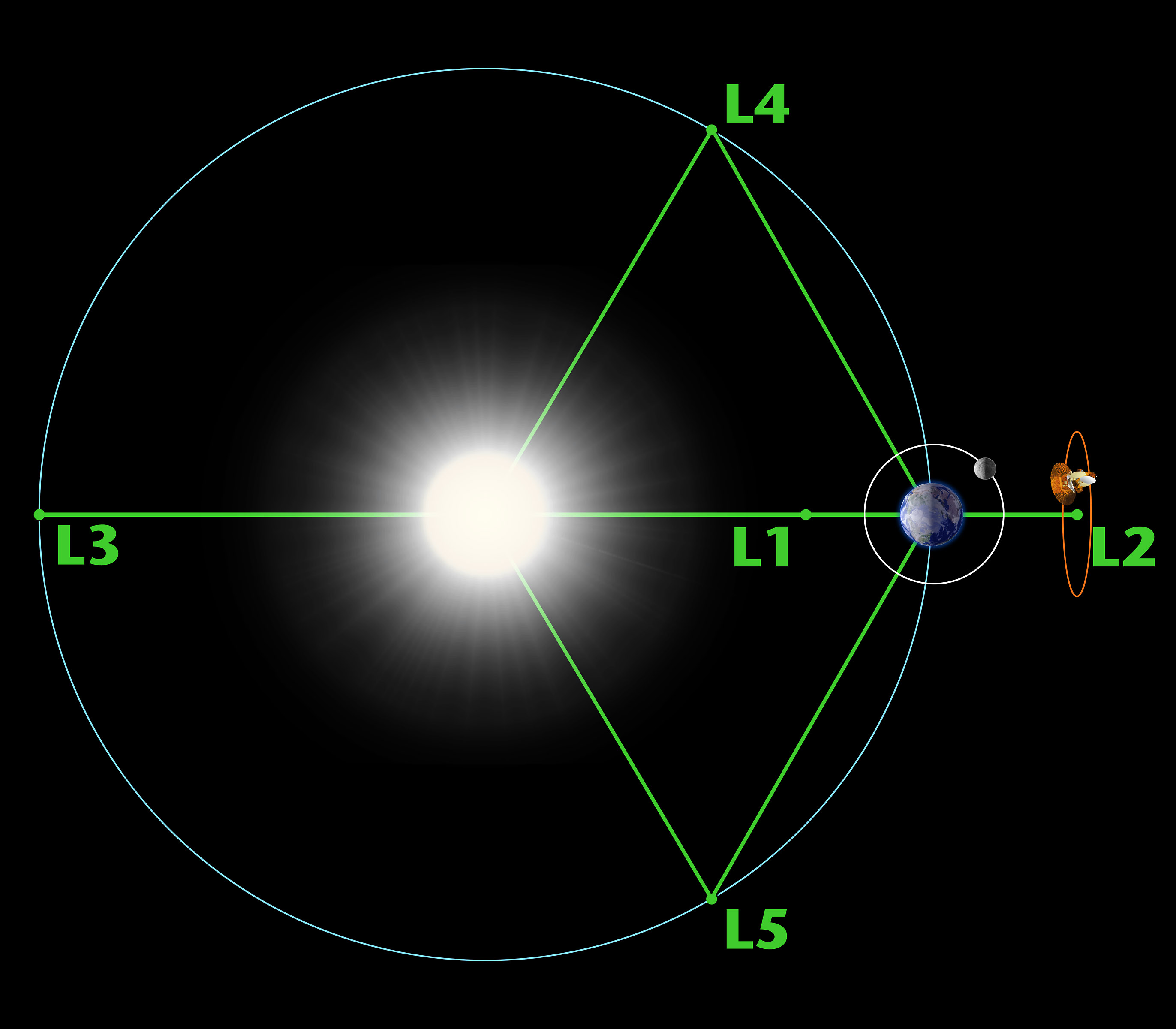
There is no apparent suitable location for intelligent life to exist in our solar system. Looking beyond our solar system presents a distance problem. Even at L4 and L5 Lagrange points we must ask why gravitational interactions with other planets would not have been detected.
The nearest star to Earth other than the Sun is Proxima Centauri. Proxima Centauri is 4.24 light years away. It is impossible to go faster than light. So, a round trip from Proxima Centauri and back would take longer than 8.48 years. That is a long time to have an alien crew travel through space. A ship for such a trip would have to be enormous just to accommodate food and water for the crew. Such a large ship has not been reported. Yes, the mother ship could house smaller craft for exploration, but where is the larger ship needed for the journey?
The alternative is the trip is much shorter. Since there is no suitable location in this solar system for advanced life, the only feasible possibility is use of wormholes.
A wormhole is a theoretical tear in space through which two distant locations are connected via a tunnel which may be shorter than the distance is otherwise.
Another issue is that if aliens have found a wormhole that happens to come to Earth, for the aliens to be able to use it for space travel would require it to be stable. If a wormhole were to open it would likely collapse and disappear rapidly.






 Multivariable Calculus: Gradient, Divergence, and Curlon 12/19/2025
 Polar Coordinate Systemon 12/16/2025
 Aurora Can Disrupt Electrical Devices And Even the Grid?on 12/15/2025
 Overcoming Difficulties Encountered with Mathematicson 12/14/2025


Comments
Yes, we have several smaller objects already known. The problem is looking for something in space. It is vast. Most things are found along the plane of the solar system, but the disturbance this time indicates the possible object is not in the solar system plane, and may be responsible to explain the seven degree tilt of the plane, not explainable yet in astronomy.
Thank you for your comment in answer to my previous observation and question.
Your answer alerts us to "visual confirmation" of something planetary as opposed to something Kuyper Belt-like.
Is the current technology sufficiently strong for such image captures?
G0 to YouTube and look at Mike Brown of Cal Tech. He has some insights. The world awaits visual confirmation, to prove it is not a cluster of small objects altering orbits of Keiper Belt objects. Best guess is it would be something like Neptune or larger.
Thank you for your comment in answer to my previous observation and question.
Do you know of any publications -- be they science fact or science fiction -- that describe Planet 9 in a helpful, non-far-fetched way?
No, L3 is just barely out of the distance of the Earth's orbit. Kepler's Laws would consider the center of mass of the solar system, not the center of the sun. So the orbital speed would be slightly greater than the Earth's to maintain a 24 hour period. Planet X, also called Planet 9. is well out there, and if it exists, and probably does, it is pars Pluto. It is also believed to not be in the plane with the currently known planets, and possibly could have a major influence on the tilt of the planetary plane grom the equatorial plane of the sun.
The sixth subheading, Speculation of a Planet at L3 for the Sun-Earth System, advises us that "People have proposed the existence of a planet at L3 of the Sun-Earth system. It would be blocked from view by the Sun. However, L3 is an unstable Lagrange point. Over time Jupiter and Saturn should have perturbed the orbit of any planet enough that it would have drifted from L3. Also, even if a planet has been hidden for recorded history it would act noticeably on other masses in the solar system. Another feature would be its effect on the center of mass of the Sun-Earth system. It is unlikely there is currently a planet sized object at L3 of the Sun-Earth system."
Does that afore-described point defer to Planet X?