

The world is full of different colors, and each color name has a story behind it. Some are inspired by fruits, minerals, or geographic locations, yet the most intriguing are those named after real people. Although most people are unaware of how the particular shades came to be named or which artists and graphic designers were responsible for creating them, a number of color names have entered our lexicon and enhanced our culture. I believe many may appreciate the backstories of these important colors.
Let's explore 10 popular colors named after artists!

 Vintage Postcard Artists with 10 Examples of Easter Cardson 02/21/2025
 Valentine's Symbolson 01/23/2025
 Thanksgiving Symbolson 11/12/2024
 Famous Witches in Literary Historyon 10/06/2024

Can You Recommend Another Color Names After the Artist?
I didn't find any connection of specific colors and specific notes in his work. Maybe I will make a full article about him and discover more. But it's not in the short-term plan.
Thank you for your comment below in answer to my previous observation and question.
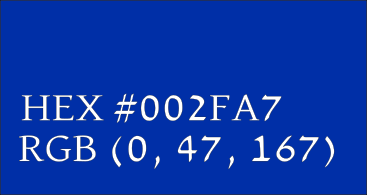
The second color name, International Klein Blue (IKB), advises us that "Yves Klein (1928-1962) was a pioneer of performance art. Both of his parents were painters, so colors naturally played a big role in his life from the very beginning. He also composed music and was the first European to receive the 4th dan rank of black belt in judo."
The artist Klein as the music-composer Klein makes me mull the following question: Might he have matched all, many, some colors with all, many, some notes?
AI is not materialized, but certain noise in data is always possible, I guess.
Thank you for your comments below in answer to my previous observations and questions.
It's wonderful to itinerate my way through such an informative wizzley with such timeless, timely interest for 21st-century art with its debut artist: Artificial Intelligence!
Would oxidation and time-wrongful effects work against or with Artificial Intelligence?
Hi, sorry for my late response.
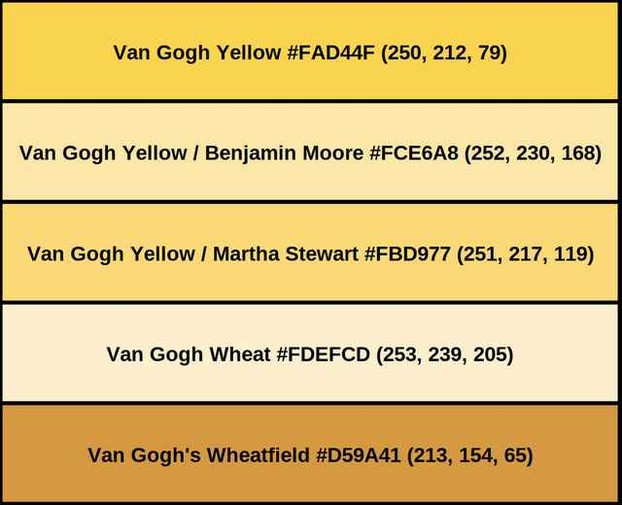
Of course, there is Van Gogh Blue in the market. Some of his most famous paintings are defined by blue shades. I decided to use some limits in the article and opted only for 'top 10' most representative colors.
Veronese Green is one of the shades without hard definition. Today's Veronese Green is very close to green of his paintings today, not in times when he painted. But numerous artists (includng contemporary) start with 'wrong' sahdes anyway, because the expect the paint will change due oxidation and other effects caused by time.
Yes, sure, red and colors with a large percent of red bear huge symbolic powers, but one important reason of their importanc was also they their availability. It was way easier to get red pigment than blue (mostly made of lapis lazuli).
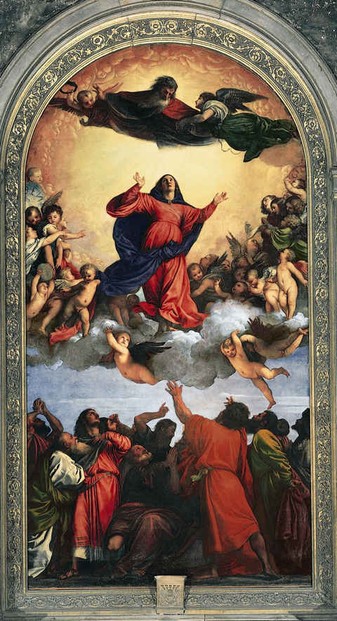
The 7th entry, Titian red, advises us that "Tiziano Vecellio (1506-1576) was an Italian Renaissance painter who was known for warm, earthy reddish, brownish, and orange tones, which, in large amounts, defined Renaissance painting."
What decided brown, orange and red tones as quintessential Renaissance?
Were they all symbolic of something (such as there's a tradition of Jesus Christ as red-haired!)?
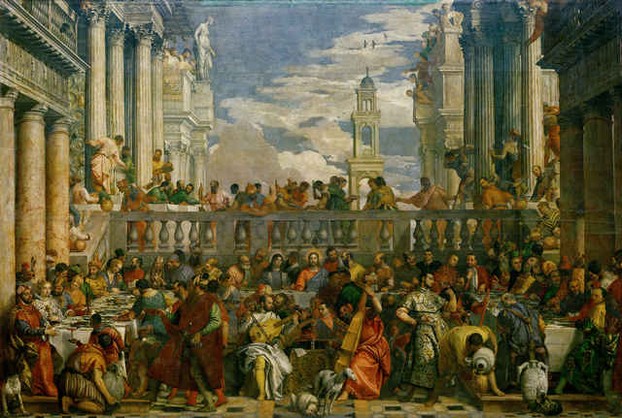
The last entry, about Veronese green, intrigues me even as it informs us that "Veronese Green is a bluish-green shade associated with the 16th-century Venetian painter Paolo Veronese (1528-1588). It's based on copper pigment, which was quite unstable; however, a synthetic alternative is available today. It's interesting to note that it became truly popular only in the 19th century when its effects became more durable and predictable. It is coded #00A671 (0, 166, 113)."
Might the Veronese mix never have manifested the same results or might Paolo Veronese have had to mix again and again and again?
Thank you for such a fact-filled, fun, functional foray through world-favorite colors!
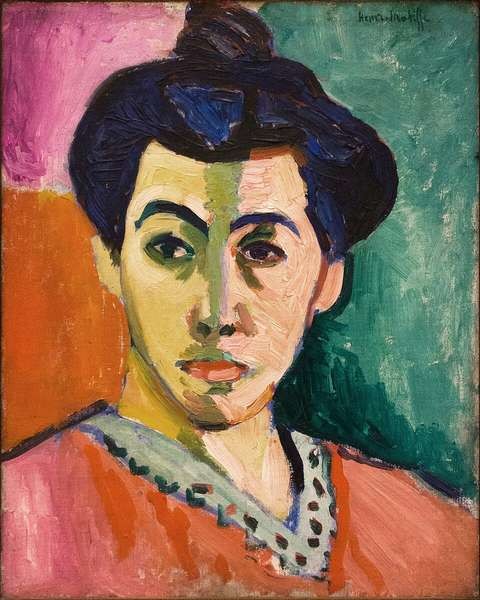
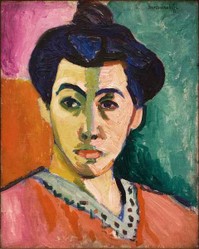
The Matisse portrait and its colorful interpretation particularly interest me even as the other nine inspire me to investigate all your informative links.
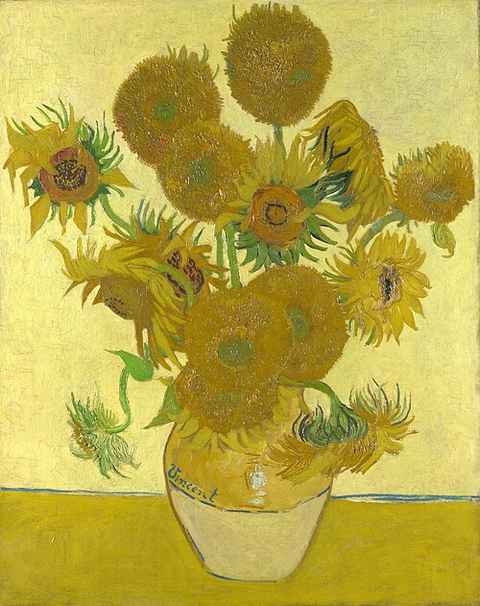
Van Gogh is an artist whose imagery inspires me even as his woody-plant interpretations invoke real-world accuracy.
The afore-listed artist lodged lovely blues and yellows together.
So might there not be a Van Gogh blue?