Wizzley
PopularLatestDiscussedEditor's Choice
AuthorsForum
Wizzley

A community of writers publishing stories worth your time — on the topics they know and love.

Explore

  • Popular
  • Latest
  • Discussed
  • Editor's Choice

Community

  • Top authors
  • New authors

Service

  • Help
  • Contact
  • Imprint
  • Terms of Use
  • Privacy

Check out our other international Webhaus communities!

Explore another site:English·Deutsch

© 2026 Webhaus LLC. All rights reserved.

LiteratureBooks, Genres, ReviewsArt & DesignArt and The ArtsCulture & SocietyHistory, Religion, PoliticsEducationSchool and LearningEntertainmentMovies, Celebs and TV
Article

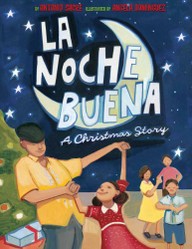
Childrens Book Review of La Noche Buena: A Christmas Story by Antonio Sacre

Spanish-speakers call Christmas Eve “the good night.” Cuban-Americans celebrate with roasted pigs and rooster’s masses. They dance until sunup Christmas Day in “La Noche Buena.”

December 24 appears on the social calendars for Spanish-speaking residents of: • Caribbean, Central, North, and South America; • Europe (Spain); • Southeast Asia (Philippines); • Supra-Saharan Africa (Ceuta, Melilla near northern Morocco). The date evokes cultural activities and religious obligations. In the above-listed bio-geographies whose micro-cultures include English and Spanish bi-culturalism and bi-lingualism, it gets called: • Christmas Eve; • La Nochebuena; • La Noche Buena. One such venue is Calle Ocho. Eighth Street operates as the major thoroughfare in the Cuban and Cuban-American neighborhood of La Pequeña Habana (Little Havana) in Miami, Florida. Its traffic patterns peak on such dates as December 24, when the guests, residents, and tourists enjoy the feasts and feats mentioned in “La Noche Buena.”

Calle Ocho: main thoroughfare in Miami's La Pequeña Habana (Little Havana) neighborhood

Domino Park, Calle Ocho, Little Havana, Miami, southeastern Florida
Domino Park, Calle Ocho, Little Havana, Miami, southeastern Florida — Infrogmation of New Orleans, CC BY SA 2.0 (https://creativecommons.org/licenses/by-sa/2.0/deed.en), via Wikimedia Commons


Nina always celebrates year’s-end holidays skating and sleighing in snowy New England with:

  • Cousins;
  • Mama;
  • Mama’s mother.

But her father expects her to keep monolingual, Spanish-speaking Grandmother Mimi company while he is out of town working until Christmas Day, December 25. The day after arriving Nina finds herself enjoying kitchen-duty with aunts and cousins:

  • Peeling and slicing garlic dedos (cloves, literally fingers) and onions;
  • Sorting beans.

Mimi gets everything heated in a cast-iron pot after adding:

  • Cumin;
  • Oregano;
  • Olive oil;
  • Sour orange peels.

She has Nina run big glass jars over to Uncle Tito’s backyard. The marinade is poured into a free-standing bathtub next to an in-the-ground, pig-roasting pit. It takes three days to get everything ready.


In "La Noche Buena," Nina's uncles dress up in new Guayabera shirts to celebrate the specialness of the day.

Guayabera shirt from back with details of alforza pleats and western-style yokes
Guayabera shirt from back with details of alforza pleats and western-style yokes — Maurice Marcellin, CC BY SA 2.5 (https://creativecommons.org/licenses/by-sa/3.0/deed.en), via Wikimedia Commons


Nino and cousin Papito collect from neighborhood trees:

  • Avocados for salad;
  • Lemons for water;
  • Limes for meat;
  • Mangoes for dessert.

The feast commences at sunset on December 24. But it does not start until family storytellers toast the past year. It expands to include neighbors who launch traveling parties progressing through the neighborhood’s backyard feasts. It finishes with the Misa del Gallo (Rooster’s Mass). But it recommences with:

  • Backyard dancing to old records;
  • Swapping jokes and stories.

It stops at sunrise on December 25 with happy revelers going to their separate beds. Nina turns in dreaming of all her up-north cousins celebrating the next year’s Christmas Eve with her father, grandmother Mimi, and relatives in Miami.


La Noche Buena begins at sunset on December 24 and ends with Misa del Gallo (Rooster's Mass).

Cubalaya: Cuban breed of domestic chicken
Cubalaya: Cuban breed of domestic chicken — Kruppert, CC BY SA 3.0 (https://creativecommons.org/licenses/by-sa/3.0/deed.en), via Wikimedia Commons

Conclusion


La Noche Buena: A Christmas Story introduces ages 4 – 9+ and preschoolers through fourth-graders and onward to:

  • Cuban-American customs;
  • Hispanic legacies;
  • Spanish phrases.

The ensemble in this “must-own” book -- printed in China and released in 2010 -- is achieved in a spirit of:

  • Holiday joy;
  • Holy Day reverence.

It merges the winsome talents of:

  • Abrams Books for Young Readers, as publisher;
  • Chad W. Beckerman, as book designer;
  • Angela Dominguez, as acrylic painter and jacket illustrator;
  • Antonio Sacre, as author.

It presents learning-fun opportunities for:

  • Cultural enrichment;
  • Educational entertainment;
  • Literary analysis.

It sustains interest from beginning to end when -- Cuban-style -- ¡Y colorín, colorado, este cuento se ha acabado! (And red-haired, red-colored, this story is ended!).


"La Noche Buena: A Christmas Story" (11:15)

Uploaded December 1, 2013, by SAES LS Spanish to YouTube ~ URL: https://www.youtube.com/watch?v=rGOOPNQes4Q

La Noche Buena: A Christmas Story

Acknowledgment


My special thanks to talented artists and photographers/concerned organizations who make their fine images available on the internet.


Image Credits


Calle Ocho: main thoroughfare in Miami's La Pequeña Habana (Little Havana) neighborhood
Domino Park, Calle Ocho, Little Havana, Miami, southeastern Florida: Infrogmation of New Orleans, CC BY SA 2.0, via Wikimedia Commons @ https://commons.wikimedia.org/wiki/File:Little_Havana_Dominos_Park.JPG

In "La Noche Buena," Nina's uncles dress up in new Guayabera shirts to celebrate the specialness of the day.
Guayabera style is popular shirt in Cuba and the Caribbean, including Caribbean area of Colombia, Mexico, and Central America.
Guayabera shirt from back with details of alforza pleats and western-style yokes: Maurice Marcellin, CC BY SA 2.5, via Wikimedia Commons @ https://commons.wikimedia.org/wiki/File:Guayaberas.jpg

La Noche Buena begins at sunset on December 24 and ends with Misa del Gallo (Rooster's Mass).
Cubalaya: Cuban breed of domestic chicken: Kruppert, CC BY SA 3.0, via Wikimedia Commons @ https://commons.wikimedia.org/wiki/File:Kruppert_Cubalaya.JPG

"La Noche Buena: A Christmas Story" (11:15)
Uploaded December 1, 2013, by SAES LS Spanish to YouTube ~ URL: https://www.youtube.com/watch?v=rGOOPNQes4Q

Antonio Sacre, author of "La Noche Buena: A Christmas Story"
Texas Book Festival, Austin, Travis County, central Texas; Sunday, October 26, 2014: Larry D. Moore, CC BY SA 4.0, via Wikimedia Commons @ https://commons.wikimedia.org/wiki/File:Antonio_sacre_2014.jpg


Sources Consulted


"About Me." Angela Dominguez Studio.com. Retrieved December 2014.

  • Available at: http://www.angeladominguezstudio.com/about-me

“Antonio Sacre: Biography.” Antonio Sacre.com. Retrieved December 2014.

  • Available at: http://www.antoniosacre.com/bio.html

Sacre, Antonio. 2010. La Noche Buena: A Christmas Story. Illustrated by Angela Dominguez. New York, NY: Abrams Books for Young Readers.


Antonio Sacre, author of "La Noche Buena: A Christmas Story"

Texas Book Festival, Austin, Travis County, central Texas; Sunday, October 26, 2014
Texas Book Festival, Austin, Travis County, central Texas; Sunday, October 26, 2014 — Larry D. Moore, CC BY SA 4.0 (https://creativecommons.org/licenses/by/4.0/deed.en), via Wikimedia Commons
the end which is also the beginning
the end which is also the beginning — OpenClips, Public Domain, via Pixabay

La Noche Buena: A Christmas Story by Antonio Sacre ~ Available via Amazon

Christmas stories

Advertisement

Me and my purrfectly purrfect Maine coon kittycat, Augusta "Gusty" Sunshine

DerdriuMarriner, All Rights Reserved

Updated April 18, 2026

Comments

No comments yet.

DerdriuMarriner
DerdriuMarriner
536 articles
★ Editor's Choice
FollowMessage

Related articles

  • Childrens Book Review of The Night of Las Posadas Written and Illustrated by Tomie dePaola
  • Childrens Book Review of The Legend of the Poinsettia Retold and Illustrated by Tomie dePaola
  • Childrens Book Review of The Santero's Miracle: A Bilingual Story by Rudolfo Anaya
  • Childrens Book Review of Adelita: A Mexican Cinderella Story by Tomie dePaola