
Disney and Warner Brothers cartoons ruled the animation world from the 1930's to the 1960's. Eventually various factions, like the film board of Canada, created a wave of experimental stop-motion output that still influences the market to this day.
Richard Williams was a British/Canadian animator from Toronto who made a name for himself in the 60s doing title sequences for feature films ("What's New Pussycat" and the "Pink Panther" films) before winning accolades and awards for a truly dark and effective "Christmas Carol" special in 1971.
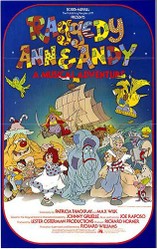
"Raggedy Ann" followed in 1977 and Mr. Williams went on to helm another successful Christmas special in 1982 ("Ziggy's Gift"). Eventually he headed up the animation on the wildly popular "Who Framed Roger Rabbit" feature film (1988) that sparked the still-thriving animation boom that exists today.
After the commercial disappointment of a pet-project, the legendary "Thief And The Cobbler" Mr. Willams penned a book that is considered an essential animation bible, 2002's "The Animator's Survival Kit."
Richard Williams has a notable style; his characters are always intricate and his animation is generally on "1's," that is, one drawing per one frame (most animation uses one drawing per 2-4 frames, by comparison). The look of "1's" is difficult to pull off for most artists and has become a Williams' signature, but it's also more costly, and the results are debatable depending who you talk to.


Comments
AnomalousArtistJul 18, 2013
TolovajJul 17, 2013
I have read about Gruelle so much I would certainly look at the animation with different eyes than average viewer. Thanks for this info, I'll try to check our library if this is available in Slovenia. Sometimes we can find real treasures in totally unexpected places.
AnomalousArtistMay 29, 2013
EliasZanettiMay 29, 2013