
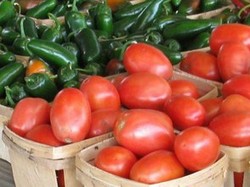
Selling foods at local farmer's markets can be a rewarding and fun way to earn extra income. Most markets are open seasonally, with operation coinciding with local supply and demand.
Farmer's markets originally sold fruits, vegetables and other crops, with some markets also moving livestock, poultry, and other goods.
Today's farmer's markets carry much more, including foods such as honey, cheese, organic produce, grass fed beef, local fish and seafood, herbs, flowers, crafts, and other items.
Before selling items at a farmer's market, it is a good idea to check with local regulations, talk to other sellers and make a checklist.
In some cases, a business license or other permits may be required. Another regulatory issue could come into play if items are being sold by weight. In some areas, regulations require that weighing equipment be certified if a vendor is weighing items during the selling process.
Depending on the type of goods that will be sold, bags, boxes, ice, or other supplies may also be necessary.
Comments
north_americaJul 23, 2022
DerdriuMarrinerJul 23, 2022
It's nice how the organizers assure local growers and purchasers a fun, popular market since the area naturally grows beautiful, tasty wild chicory, garlic, onion, rice and wheat. A pleasant combination of clement weather and healthy soils lets farmer's-market and home-gardener growers enjoy the beautiful looks, scents and tastes of acorns, chestnuts and walnuts and of blackberries, blueberries, mulberries, raspberries, strawberries, even wineberries.
One home-garden grower made cake (one a chocolate-substitute chicory -- a bit bitter but delicious), pasta, pie (one a chocolate-substitute chicory -- once again, a bit bitter but unanimous requests for more) and quiche with the above ingredients. She may have made some to sell at the farmer's market.
It seems to me that, what with all the biogeography and history in the Harpers Ferry area, that local-grown, wild products would be such crowd-pleasers at area farmer's markets and in area restaurants.
Would this turning local wild-grown edibles into scrumptious baked goods be something that you've come across in your interactions with farmer's markets and flea markets?
DerdriuMarrinerJul 11, 2022
One farmer's market that I went to paired their most profitable items with recipes (for an additional 5 cents!). Would this be something that still is being done?
DerdriuMarrinerJun 30, 2022
World travelling North Indian Chef Vicky Ratnani has observed the pandemic's effects on eating habits. He's noted more cooking at home, greater sensitivity to sustainability and greater commitment to food waste avoidance.
DerdriuMarrinerJun 16, 2022
Farmer's markets carry what most interests me: fresh foods. I go to community events even as they so often have baked goods, which I appreciate but which are less important to me than fresh fruits and vegetables. Flea markets have been less common here or held further away.
Would community events, farmer's markets and flea markets tend to carry the same baked goods?
I would tend to think of community events and farmer's markets as acquainting me more with local and traditional cuisines.
DerdriuMarrinerJun 13, 2022
Will hand-shelled lima beans be available only in exclusive specialty stores or online? Would this be something temporary that ultimately will readjust with trained workers at lower but still attractive, reasonable pay?
north_americaMay 27, 2022
DerdriuMarrinerMay 18, 2022
It always seems like such an accomplishment when I find lima beans -- in excellent condition and at excellent prices -- in a farmer's market. Wouldn't they tend to be associated with higher-priced edibles?
north_americaMay 17, 2022
DerdriuMarrinerMay 16, 2022
Would food sales tend to do better at flea markets or in farmers' markets? I guess I would tend to associate drinks and snack-like foods as doing better in the former.
DerdriuMarrinerApr 11, 2017
happynutritionistSep 5, 2015
cazortOct 27, 2013
Selling clearance items can be great, but I think it's important to set the threshold for clearance carefully. For example, at the bakery we sold day-old bread for half-price, but we were also very careful to manage the supply and stocks so that we weren't regularly running out of the same types of bread. If you always make too much, and it's always available at half-price, you can lose profits if people who like the products start always buying them on sale.
Watching your stocks carefully and setting the supply and price so that your products normally sell out or come very close to it is ideal...then you can use the sales to clear out the leftover odds and ends.
GuestJun 8, 2011