Many students have an unusual fear of math. Frustration and lack of past successes often are the causes of math anxiety.
How can a student overcome math anxiety?
First, it is necessary to determine what study skills are necessary for success.
Second, it is necessary to believe success is possible. This means POSITIVE THINKING!
Third, it is necessary to stop worrying about the past.
The study skills for math require that one realize math is learned differently than most other subjects. Math cannot be learned by memorizing facts. Math involves developing a process of logical thought. The good news is that math can involve using skills already developed. The only way to get past math anxiety is to develop appropriate study skills.
1. Practice. While other subjects might require reading, math requires practice. But practice in a way that reinforces the skill. It is inappropriate to practice problems, if they are being done incorrectly. NEVER work a problem that you cannot check! Reinforcing the wrong technique increases frustration and wastes time. NEVER work a problem until you have checked the last one, or you may repeat the error. NEVER work past a problem with an error until you either get it correct, have looked at an example, or found other help and have corrected the problem.
2. GET HELP! Often there are several ways of working the same problem. Search until you have found a method you understand. Your resources include:
a. Notes from class,
b. Ask a friend,
c. Ask your instructor,
d. Go to tutoring,
e. Read examples in the text carefully, and
f. Get in a study group. Peer learning is effective.
It is sometimes best to go to different sources of information simply because you then have several options to choose from. But be careful not to blend different approaches and add to the confusion.
Believe in yourself! Get that POSITIVE ATTITUDE
Ask yourself, did I study? Did I work each type of problem until I could work it correctly? If you answer yes then why would you not duplicate your success on a test? So, if you have prepared properly, expect to succeed.
Ask yourself, am I not as smart as others in the class? Were there students no more intelligent than myself who have passed
this class in the past? Of course there were, so why shouldn't you?
Don't dwell on past failures. Do you own a calculator? Did you bother to learn how to use it? Delegate the arithmetic, and eliminate many careless errors. With the careless errors gone you should miss more problems and pass, with a good grade. So stop worrying and prepare to succeed.
Reduce the problem length by adding one or two ideas to what you already know. Looking at an example of solving a quadratic equation can be
intimidating. However, realizing that only one or two new steps gets you to solving linear equations makes the problem reasonable. Increase your problem range by building on what you know rather than starting from scratch. SIMPLIFY!
Work in as few steps as possible. Every step is a potential careless error. Fewer steps means higher grades! Higher grades eventually lead to POSITIVE THINKING!!!
Improve you test taking skill. Work the problems you know first. If there are enough of these that you are confident of passing, RELAX! This will increase your grade. If you can reduce the tension your grade should respond.
So, recapping the significant points:
Study well.
Take tests in a way to help your grades.
Forget the past.
Build on old material rather than become overwhelmed with complex problems.
• BELIEVE in yourself.







 Multivariable Calculus: Gradient, Divergence, and Curlon 12/19/2025
 UAPs, Formerly UFOs, If They Are Real How Can We Explain Their Arrival to Earth?on 12/18/2025
 Polar Coordinate Systemon 12/16/2025
 Aurora Can Disrupt Electrical Devices And Even the Grid?on 12/15/2025

Comments
Since Others could be written.getting the foundations of algebra is critical, I have only written that one preparation book.
Thank you for your comment in answer to my previous observation and question.
The introductory section advises us, in its second paragraph, that "The placement test for algebra was the first one given, and if a student passed it additional testing for trigonometry and calculus were in order."
The next-last sentence in the next-last paragraph to the introductory section considers the book Algebra Review Before College.
Might there be Geometry Review Before College and Calculus Review Before College?
Yes, but math skills imply one has developed logic. I do not consider rote learning of math processes as worthwhile. Students should always ask why, and building on understanding.
Thank you for your comment in answer to my previous observation and question.
The second subheading, Why Am I Not Able to Learn Mathematics?, contains in its last paragraph the consideration that "There are two things that can help with the process. Take a philosophy class in logic. The skills will carry over to mathematics. For a technique that is more fun, play chess. Knowing the consequences of a move is a very similar skill to the results in applying a mathematical operation. Look what can happen if different pieces are moved, and develop the mental process needed for mathematics."
Might math astuteness manage the reverse, the vice-versa in making chess moves and philosophical matters easier, quicker to master?
Thank you for your comment in answer to my previous observation and question.
The second subheading, Why Am I Not Able to Learn Mathematics?, contains in its last paragraph the consideration that "There are two things that can help with the process. Take a philosophy class in logic. The skills will carry over to mathematics. For a technique that is more fun, play chess. Knowing the consequences of a move is a very similar skill to the results in applying a mathematical operation. Look what can happen if different pieces are moved, and develop the mental process needed for mathematics."
Might math astuteness manage the reverse, the vice-versa in making chess moves and philosophical matters easier, quicker to maintain?
Thank you for your comment in answer to my previous observation and question.
The second subheading, Why Am I Not Able to Learn Mathematics?, contains in its last paragraph the consideration that "There are two things that can help with the process. Take a philosophy class in logic. The skills will carry over to mathematics. For a technique that is more fun, play chess. Knowing the consequences of a move is a very similar skill to the results in applying a mathematical operation. Look what can happen if different pieces are moved, and develop the mental process needed for mathematics."
Might math astuteness manage the reverse, the vice-versa in making chess moves and philosophical matters easier, quicker to maintain?
Math is more than performing calculations. It develops logical thought. If the thought process is the focus of a course only the mind should be allowed. In some courses the thought pattern is developed by learning what to do with a calculator, in which cases the crunching of the numbers is a secondary skill, and can be assumed to have been mastered in a prior course. Then a calculator can be allowed.
Math is more than performing calculations. It develops logical thought. If the thought process is the focus of a course only the mind should be allowed. In some courses the thought pattern is developed by learning what to do with a calculator, in which cases the crunching of the numbers is a secondary skill, and can be assumed to have been mastered in a prior course. Then a calculator can be allowed.
Thank you for your comment below in answer to my previous observation and question.
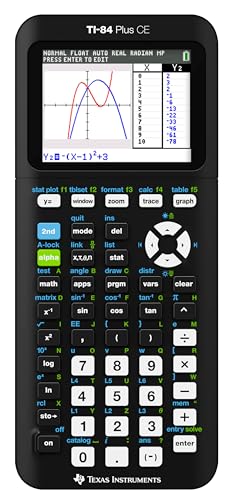
The fourth subheading, Use a Calculator if Allowed, advises us that "There may be a restriction on which calculator, if any, is allowed. It is worth getting one, and actually learning how to get the most out of it. If allowed, I recomment the TI-84."
What would be allowed if not a calculator?
Study aids differ in effectiveness student. It is also dependent on what is the need. Missing class might be best handled by using a video. Infights and different techniques might be best handled by study guides.