Wizzley
PopularLatestDiscussedEditor's Choice
AuthorsForum
Wizzley

A community of writers publishing stories worth your time — on the topics they know and love.

Explore

  • Popular
  • Latest
  • Discussed
  • Editor's Choice

Community

  • Top authors
  • New authors

Service

  • Help
  • Contact
  • Imprint
  • Terms of Use
  • Privacy

Check out our other international Webhaus communities!

Explore another site:English·Deutsch

© 2026 Webhaus LLC. All rights reserved.

Plants & GardeningFlowers, Veggies et. al.FamilyKids and ParentingGreen LivingReduce, Reuse, RecycleHobbies & CraftsGames, Crafts, CollectingHome ImprovementDecor, DIY, Maintenance
Article

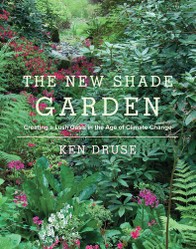
Ken Druse’s The New Shade Garden: Lush Oasis in the Climate Change Age

Author, blogger, gardener, lecturer, photographer Ken Druse’s The New Shade Garden has facts and photos on creating a lush oasis in the climate change age.

Shade gardens make outdoor life eco-friendly and economical Globally warmed climate change acts to make sunlit areas feel more parched, look more scorched, and register 15° to 20° higher than shaded counterparts. Terraforming Planet Earth’s atmosphere back to healthy, hospitable configurations ultimately brings gardeners and scientists together since progress depends upon: • bio-geographical practices; • scientific advances; • technological breakthroughs. Beautifying the interiors of churches, factories, houses, offices, and stores with air-freshening phytoremediating plants and embellishing their exteriors with shaded oases of flowering, fruiting foliage from surface to treetop levels count among the first critical steps on 1,000-mile (1,609.34-kilometer) journeys toward minimizing climate-changing global warming. Ken Druse’s The New Shade Garden expertly describes exactly how to go about creating a lush oasis in the age of climate change. ***** Website: http://kendruse.typepad.com/ *****

Shade gardens easily convey vibrancy, even during climate changes.

colorful variety in shade garden; Chatauqua Inn, Chatauqua, Chatauqua County, southwestern New York
colorful variety in shade garden; Chatauqua Inn, Chatauqua, Chatauqua County, southwestern New York — Sue Manus, CC BY 2.0 (https://creativecommons.org/licenses/by/2.0/deed.en), via Wikimedia Commons

Shade gardens need water-dispensing control through soaker hoses


The American Horticultural Society emphasizes the experience and expertise behind Ken Druse’s in-person, in-print, and on-line accomplishments by listing The Natural Garden of 1988 among the all-time best plant-related books. The AHS furnishes similarly glowing evaluations of:

  • The Natural Shade Garden of 1992;
  • The New Shade Garden of 2015.

It gives the savvy author, blogger, gardener, lecturer, photographer high marks for clear illustrations and current information.

The New Shade Garden indeed has timeless, timely, user-friendly formats with:

  • introductions to eco-friendly replacements of fertilizer-gobbling, water-guzzling turf-grasses with pergola-/trellis-supported shade plants and woodland ground covers;
  • sections on food chain webs, shade options (light, filtered, full, medium, woodland), space layers (inner, in-between, outer), tolerant plants (covers, flowers, shrubs, trees, vines). 


Fine, outward-arching leaves of prairie dropseed (Sporobolus heterolepis) prettify landscapes as ground cover.

New England Botanic Garden at Tower Hill (Tower Hill Botanic Garden), Boylston, central east Worcester County, Massachusetts
New England Botanic Garden at Tower Hill (Tower Hill Botanic Garden), Boylston, central east Worcester County, Massachusetts — Daderot, Public Domain, via Wikimedia Commons

Shade gardens offer woodland eco-friendliness anywhere Earthlings garden


Twenty-first century shade gardens in fact imitate the woodland organization of non-woody and woody plants into lower, middle, and upper niches. The New Shade Garden therefore juggles the most carefree, exquisite, generous specimens into ground-covering combinations of:

  • Allegheny spurge;
  • alumroot;
  • American millet grass;
  • barren strawberry;
  • common blue violet;
  • cranesbill;
  • northern sea oats;
  • prairie dropseed;
  • sedge.

It keeps low-level habitats attractively colored, organized, and textured with such native bulbs as:

  • avalanche, fawn, trout lilies;
  • mission bells;
  • wind-flower.

It also lets in such colorful, fragrant, low-lying beauties as:

  • Adam’s needle, anemone;
  • baneberry, bee balm, beetleweed, bellflower, bitter-cress, bleeding-heart, blue mist-flower,  blue star, blue-eyed Mary;
  • cardinal flower, Carolina phlox, common/western pearly everlasting;
  • false alumroot, dragonhead, hellebore, nettle, Solomon’s seal, spirea.  


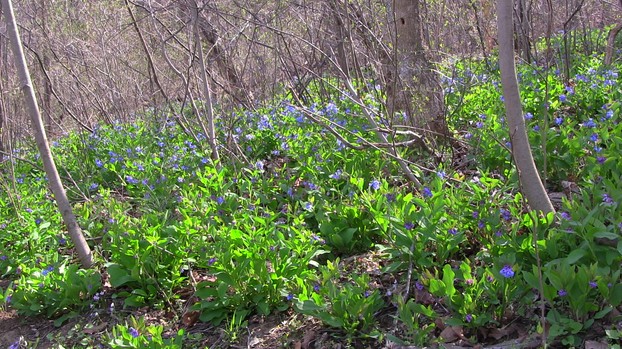
Virginia bluebells (Mertensia virginica) color lower niche of three-layered shade gardens with gray-green rounded leaves and pink buds that blossom in bell shapes of soft blue or, rarely, pink or white.

Bluebell Trail, Shenandoah River Raymond R. "Andy" Guest Jr. State Park (Shenandoah River State Park), Northern Virginia
Bluebell Trail, Shenandoah River Raymond R. "Andy" Guest Jr. State Park (Shenandoah River State Park), Northern Virginia — Virginia State Parks (vastateparksstaff), CC BY 2.0 (https://creativecommons.org/licenses/by/2.0/), via Flickr

Shade gardens promote eco-friendly gardening for Earth’s sustainability


Lower niches also merge such stunning natives as:

  • foam-flower;
  • garden angelica, gentian, goatsbeard;
  • Indian rhubarb;
  • jack-in-the-pulpit, Jacob’s ladder, jump-seed;
  • merry-bell, mint, monkey-flower, mountain-mint;
  • peony, poppy-wort;
  • queen-of-the-forest, queen-of-the-prairie;
  • Solomon’s seal, speedwell, spiderwort, spikenard, stonecrop, strawberry begonia;
  • three-flowered aven, turtlehead;
  • umbrella-leaf;
  • Virginia bluebells;
  • water aven, wild ginger, woodland phlox.

They gently nudge:

  • middle niches for alder, bladdernut, buckeye, chokecherry, crabapple, dogwood, hazelnut, holly, ironwood, pawpaw, plum, redbud, serviceberry, witch-hazel;
  • upper niches of American wisteria, beech, birch, Carolina jessamine, columbine, cross-vine, desert fan palm, dwarf palmetto, needle palm, pine, pipevine, poplar, saw palmetto, sycamore, trumpet honeysuckle, vase-vine, Virginia creeper.

All levels thereby offer gardening success since The New Shade Garden ends with composting, fertilizing, irrigating, mulching, potting, and pruning practicalities. 


Red and yellow flowers (five petals, five sepals) of Eastern North American herbaceous perennial native wild columbine (Aquilegia canadensis), also known as eastern red columbine, showily perform in upper niches of three-layered shade gardens.

Great Falls State Park, northern Fairfax County, Northern Virginia; Wednesday, April 4, 2012, 14:43:32
Great Falls State Park, northern Fairfax County, Northern Virginia; Wednesday, April 4, 2012, 14:43:32 — Fritz Flohr Reynolds (FritzFlohrReynolds), CC BY SA 2.0 (https://creativecommons.org/licenses/by-sa/2.0/), via Flickr

Acknowledgment


My special thanks to talented artists and photographers/concerned organizations who make their fine images available on the internet.


Image Credits


Shade gardens easily convey vibrancy, even during climate changes.
colorful variety in shade garden; Chatauqua Inn, Chatauqua, Chatauqua County, southwestern New York: Sue Manus, CC BY 2.0, via Wikimedia Commons @ https://commons.wikimedia.org/wiki/File:Shade_garden,_Chautauqua.jpg; Sue Manus, CC BY 2.0, via Flickr @ https://secure.flickr.com/photos/suespix/3827826512/

Fine, outward-arching leaves of prairie dropseed (Sporobolus heterolepis) prettify landscapes as ground cover.
New England Botanic Garden at Tower Hill (Tower Hill Botanic Garden), Boylston, central east Worcester County, east central Massachusetts: Daderot, Public Domain, via Wikimedia Commons @ https://commons.wikimedia.org/wiki/File:Sporobolus_heterolepis_-_Tower_Hill_Botanic_Garden.JPG

Virginia bluebells (Mertensia virginica) color lower niche of three-layered shade gardens with gray-green rounded leaves and pink buds that blossom in bell shapes of soft blue or, rarely, pink or white.
one-mile Bluebell Trail, Shenandoah River Raymond R. "Andy" Guest Jr. State Park (Shenandoah River State Park), Warren County, Northern Virginia: Virginia State Parks (vastateparksstaff), CC BY 2.0, via Flickr @ https://www.flickr.com/photos/vastateparksstaff/16960552528/

Red and yellow flowers (five petals, five sepals) of Eastern North American herbaceous perennial native wild columbine (Aquilegia canadensis), also known as eastern red columbine, showily perform in upper niches of three-layered shade gardens.
Great Falls State Park, northern Fairfax County, Northern Virginia; Wednesday, April 4, 2012, 14:43:32: Fritz Flohr Reynolds (FritzFlohrReynolds), CC BY SA 2.0, via Flickr @ https://www.flickr.com/photos/fritzflohrreynolds/7455151708/

Ribbon-shaped, lemon zest-scented petals of common witch-hazel (Hamamelis virginiana), also known as American witch-hazel, fragrance and ornament middle niches in three-layered shade gardens.
Rock Creek Park, northwest quadrant, Washington DC; Sunday, November 18, 2012, 16:13:47: Fritz Flohr Reynolds (FritzFlohrReynolds), CC BY SA 2.0, via Flickr @ https://www.flickr.com/photos/fritzflohrreynolds/8197882411/

 

Sources Consulted


Druse, Ken. 1992. The Natural Shade Garden. New York NY: Clarkson Potter; New York, Toronto, London, Sydney, Auckland: Random House Inc.

Druse, Ken. 2015. The New Shade Garden: Creating a Lush Oasis in the Age of Climate Change. New York, NY, U.S.A.: Stewart, Tabori & Chang. 


Ribbon-shaped, lemon zest-scented petals of common witch-hazel (Hamamelis virginiana), also known as American witch-hazel, fragrance and ornament middle niches in three-layered shade gardens.

Rock Creek Park, northwest quadrant, Washington DC; Sunday, November 18, 2012, 16:13:47
Rock Creek Park, northwest quadrant, Washington DC; Sunday, November 18, 2012, 16:13:47 — Fritz Flohr Reynolds (FritzFlohrReynolds), CC BY SA 2.0 (https://creativecommons.org/licenses/by-sa/2.0/), via Flickr
the end which is also the beginning
the end which is also the beginning — OpenClips, Public Domain, via Pixabay

The Natural Shade Garden by Ken Druse ~ Available via Amazon

shade gardening

Advertisement

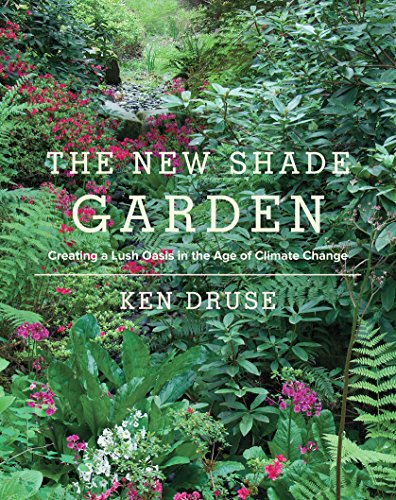
The New Shade Garden: Creating a Lush Oasis in the Age of Climate Change by Ken Druse ~ Available via Amazon

shade gardening

Advertisement

Miracle Gro MGSPA38050CC Premium Soaker Hose with Fittings, 3/8-Inch by 50-Feet ~ Available via Amazon

soaker hose

Advertisement

Good Ideas RWURN-SAN Rain Wizard Rain Barrel Urn 65-Gallon, Light Granite ~ Available via Amazon

Good Ideas Rwurn-Lig Rain Wizard Rain Barrel Urn 65 Gallon, Light Granite

Advertisement

Cedar Pergola Swing Set by All Things Cedar: western red cedar with sanded finish ~ Available via Amazon

shade garden pergolas

Advertisement

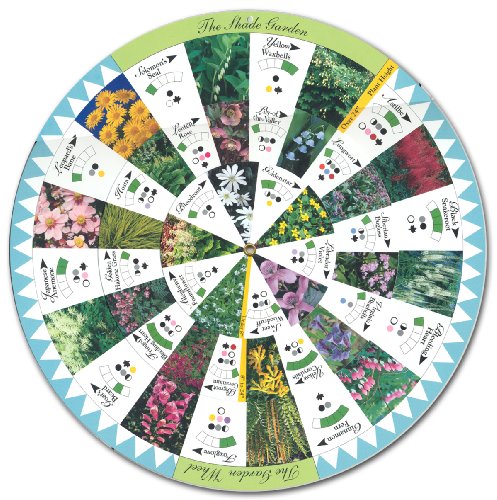
Womanswork 610sg Shade Garden Wheel ~ Available via Amazon

shade gardening

Advertisement

Me and my purrfectly purrfect Maine coon kittycat, Augusta "Gusty" Sunshine

DerdriuMarriner, All Rights Reserved

Updated September 11, 2026

Comments

DerdriuMarrinerAug 17, 2026

Alumroot hardiness answers to wide-ranging versatility in environmental ambiances.

The afore-elucidated plant enthusiastically endures seasonal heat, humidity and shade.

DerdriuMarrinerAug 14, 2026

The false-alumroot flower somewhat acknowledges alumroot influences even as it achieves such appearances while adding airier, more open aspects.

DerdriuMarrinerAug 14, 2026

The alumroot flower appears as little, small, tiny bells in airy panicles (compound raceme; "tuft"; Latin pānicula ["millet-seedhead little"; Latin pānus -ula; Greek πῆνος πηνίον]).

Its color often centers on green-white or pink.

DerdriuMarrinerAug 14, 2026

The growth habit of the false alumroot involves airy, upright stems.

The false-alumroot foliage looks delicate and not so dense.

DerdriuMarrinerAug 14, 2026

The growth habit of the alumroot plant configures low, spreading clumps.

The main ornamental feature of all alumroots is their lobed, scalloped foliage.

DerdriuMarrinerAug 14, 2026

The leaf texture of false alumroot appears feathery, fine, soft and smooth.

DerdriuMarrinerAug 13, 2026

The alumroot-leaf texture appears smooth even as sometimes alumroot foliage arranges into somewhat hairy appearances.

Alumroot leaves configure either lobes or scallops.

DerdriuMarrinerAug 13, 2026

For those asking about alumroot (Heuchera) and false-alumroot (xHeucherella), the plants abiding in the text section between the second and the third in-text images, there are parentage, leaf-texture, hardiness, growth-habit, flower-form, common-use differences.

Alumroot plants are in the genus Heuchera even as false-alumroot plants arise from hybridizing Heuchera-alumroot and coral-bell and Tiarella-foamflower genera.

DerdriuMarrinerAug 13, 2026

Appalachian barren and barren strawberries (Waldsteinia fragarioides) appear wild strawberry-like in their bright-yellow flowers; glossy, trifoliate ("three-leaved"; Latin tri- foliātus) leaves; low, spreading habit even as their fruit achieves no botanical-berry standards.

Barren-strawberry fruit configures as a dry, inedible, single-seeded, small achene ("not-gaping"; Greek ἀ- χαίνω) even as wild strawberries configure edible, true-fruit berries.

DerdriuMarrinerAug 13, 2026

For those asking about barren strawberries, in the text section between the second and third in-text images respectively of prairie dropseed and Virginia bluebells, the name origin elucidates fruit inedible to human and wildlife sentients.

DerdriuMarrinerAug 13, 2026

As Mira noted so accurately, so appropriately four comment boxes down Sep, 10, 2015, shade gardens most definitely nourish and nurture mall interiors!

DerdriuMarrinerSep 18, 2015

blackspanielgallery, Planning definitely is not optional when it comes to gardening! So, yes, planting wheels serve most wonderfully well when navigating garden supply stories and nurseries.

DerdriuMarrinerSep 18, 2015

Art7437, But the actual Ken Druse book always prettifies book shelves, coffee tables, wall cabinets, and writing desks!

blackspanielgallerySep 10, 2015

It is valuable to include a planting wheel, since finding shade loving plants is not always easy when one has to read while at a nursery. Planing ahead is helpful,

MiraSep 10, 2015

This looks like a nice garden to have inside a mall! :)

Art7437Sep 10, 2015

I download a book on this site http://readpdfbooks.net/
DerdriuMarriner
DerdriuMarriner
536 articles
★ Editor's Choice
FollowMessage

Related articles

  • Cassie Liversidge’s Homegrown Tea Planting, Harvesting, Blending Guide
  • Book Review: Growing Healthy Houseplants, by Ellen Zachos, in Storey Basics Self-Reliance Series
  • Early Spring Colors in the Yard: Blue, Lavender, Purple, Yellow
  • Landscaping Shade Garden with Hydrangeas