
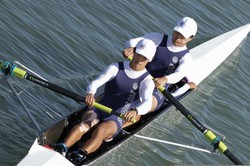
Much history and tradition has its roots by the Thames, and the annual boat race, on the river Thames between two great sites of learning annually graces the Thames as it meanders its powerful way as it flows through London on its majesterial source as it wends its way to the grey waters of the North Sea. London is a civilised city, but the Thames takes no hostages to the weather, and at times the light rowing boats struggle, oft times against the tide. The weather exerts itself , but the civilised and dignified event asserts its character whatever the weather.
Picture courtesy of Pixabay

The Boat Race
by frankbeswick
Once a year Oxford and Cambridge universities have an annual boat race once a year. It is a great British tradition.
An event rooted in time
I sat in my comfortable room at home, feeling warm and relaxed, as I looked at the television in the early afternoon, watching television and listening to the wind blowing in my locality and watching the small white foamy waves ruffling the river's surface. The path of the tides sweeps down from the North and eventually enters the Thames estuary, and then makes its way up the Thames Valley. At. high tide the tide and the seaward flow of the river combine as they meet head on. This is a normal phenomenon, but the weather can be tougher, as a south-westerly can sweep up and the combination of wind, current and tide can make the river uncomfortable. Today's race was on such a day, so two boats containing eight rowers and a cox, set out to challenge the mighty Thames ' flow. They were not in any danger, as a small fleet of boats containing umpires and journalists, accompanied by security staff were following the two rowing boats
There were two boats, a boat each for the two crews, one for the women's rowers and one for the male crew. There was much at stake. Oxford University women had lost the last few races to their Cambridge opponents, and they had committed much effort into changing their lack of success. Oxford wear dark blue; Cambridge wear light blue. I support the light blue of Cambridge, because I spent many years working for UCLES, the University of Cambridge Local Examination Syndicate and because I earned a certificate from a course that I studied. The boats set off.
Oxford got off to a good start, accelerating away from Cambridge who in reply tried to catch up with them. But the waters were rough and regaining their position was not going to be easy. There was much jockeying for tradition, which attracted the attention of the umpire when it led to boats becoming too close to each other.
By the time they had got too much ground for them to be overtaken Oxford knew that they had broken the run of eight losses to the women's team. What remained was for the Dark Blue's Boat to pass under the triple arches and shortly afterwards to sail past the finishing line. The run of bad results had been broken by the women's team
The Men's Race
Between the men's and women's races there was a relatively new event, the junior race This is an attempt to stimulate interest in rowing among sports conscious teenagers chosen from students from teams linked to local secondary schools. Mixed teams composed of male and females aged in the mid teens compete for victory on a course of one kilometre, longer than this would be too demanding for the youngsters, especially if conditions were difficult. The youngsters are very popular with the spectators and enjoy support from the adult students in the boat crews.
Then the males stepped out. We were seeing a feast of muscular masculinity. All of them tall and well built we feasted on the sight of elite athletes, all ready to face the river and each other. I cheered the light blues of Cambridge. Two of my nephews and nieces support Oxford, as they are graduates of that university. But they are not elite sports people. Cambridge had learned their lesson in the women's race' . They had allowed Oxford women to get off to a quick start, and Oxford got a winning start. But in the mens's race they had been determined to ensure that they were not going to alllow Oxford thiis advantage. The race was hard fought. Both teams attempted to take advantage of the tidal flow and the currents, and the umpire had to exert control with warnings shouted his megaphone. But the denial of Oxford's advantage caused the Cambridge men's boat to have an unassailable start, and so the light blues won the race.
The score was one apiece. The race was conducted in a good, sporting spirit.
Updated: 04/08/2026, frankbeswick
You might also like
A timely tale of three citiesCities are large permanent settlements. Why do they lose their permanence?
The Refugee ResponseOur first instinct is to throw up the "STOP" sign and refuse to open our coun...
Disclosure: This page generates income for authors based on affiliate relationships with our partners, including Amazon, Google and others.

 Darkness over the Earth the skies darkened when Jesus was crucifiedon 02/09/2026
 TheThousand Year Gardenon 11/26/2025
 Women of the Gospelson 10/11/2025
 Religious Gardenson 08/25/2025


Comments