
Gas grills are by far the most popular choice for the outdoor grilling enthusiast. They may be natural gas grills that plug into your existing line or propane grills that use a tank. These grills are perfect if you want to quickly fire up your grill without the messy and time-consuming preparation and clean-up that comes with a charcoal grill. Gas grills also provide consistent and constant heat at the touch of a button, while charcoal grills require stoking the fire. They also have a range of grill accessories available, from built-in refrigerators and drawers to complete rotisserie systems and smoker boxes.
A Look at the Types of Outdoor or BBQ Grills
Want to buy a new grill but you're not sure which type to get? Here's a comparison of the types of grills, including pros, cons how often you'll need replacement grill parts.
If you're shopping for an outdoor or BBQ grill there are more options out there than ever before. From charcoal and gas grills to electric and portable models, all grills have unique advantages and disadvantages to consider before you make your choice. Before you get overwhelmed, here's a quick comparison of the different types of grills so you can start narrowing down your choices.
Image credit: Kidmissile
Gas Grills
While a gas grill is easy to start and clean up, keep in mind you'll occasionally need to buy some gas grill parts to replace rusted out or broken parts, including burners, heat plates and ignition systems. The grills themselves also tend to be the most expensive, although they're affordable to operate.
What to Look for: Considering a gas grill? Make sure you buy a brand that uses high-quality stainless steel parts to avoid rust on your grill in the near future. Unfortunately, many grill manufacturers advertise a grill as stainless steel, knowing full well it's not high-grade. These gas grill parts tend to wear out the fastest and need replacement in as little as 1 to 3 years.
Charcoal Grills
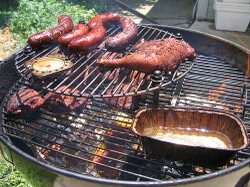
Charcoal grills use briquettes to provide heat rather than gas. While cooking with a charcoal grill takes longer and is more costly than a gas grill, some people prefer the taste of food prepared on a charcoal grill. These grills tend to impart a smoky flavor into steaks, especially when you use wood chips. Charcoal grills also reach higher temperatures than a gas grill so you'll find it quicker to sear your steaks. A charcoal grill also tends to require less replacement grill parts over its life because it has fewer moving parts.
There are plenty of downsides to charcoal grills, however, that you should consider before you make your decision. With a charcoal grill, you can't simply fire up the grill and get cooking. It can take around 45 minutes or longer to start up the coals and get the grill pre-heated. Cleaning a charcoal grill is also a time intensive task as you'll need to clean your grill grates and throw out the remaining ashes. When you factor in the cost of briquettes and lighter fluid, charcoal grills are the costliest grill to operate.
What to Look for: Have you decided on a charcoal grill? If so, you'll find there are many styles. Weber Kettle grills are the most popular charcoal grill available because they're versatile and simple to use. Start your search by deciding how you want to cook. Think about whether you want to smoke meat, cook food indirectly, cook beer can chicken. If you only want to cook small amounts of food at once, like two steaks for example, a portable model may be the best choice.
Electric Grills
Both indoor and outdoor electric grills are incredibly convenient and simple to use because they use hot grill plates powered by electricity rather than gas or briquettes to cook. They're mostly popular with people living in apartments or condominiums that forbid charcoal and gas grills, although they are catching on with other homeowners. These grills definitely offer fast cooking, portability and convenience, although you're sacrificing taste. You simply won't get a smoky flavor when you cook with an electric grill. Like charcoal grills, electric BBQs don't really need many replacement grill parts over their life so this is one cost you won't have to factor in.
Buying Tips: The George Foreman Grill is the most well-known and popular type of electric grill. If you've decided an electric model is your best choice, make sure you choose something space-saving with enough surface space to cook for everyone living in your household.
Portable Grills
Portable grills are, obviously, designed to be transported. They're available in both charcoal and propane versions and make the perfect compliment to a tailgating party or a BBQ at the park. Portable models have one major disadvantage: size. They operate in the same way as their larger counterparts with the same taste, but you won't be able to cook for a large crowd.
Buying Tips: If you want a portable grill, the most important thing to look for is a lightweight design, followed by durability. Don't go with a cheap grill that will get dented or broken during its first trip out of the house. You'll also want to choose something that has the surface area you need.
Other Types of Grills
While the four grill types above are the most common, there are actually dozens of types of grills to choose from. Here's a look at some other grills you may want to buy. A word of caution, though: you may have trouble finding replacement grill parts for some of these grills as they just aren't as popular.
- BBQ Rotisserie: These grills have a rotisserie system built in that can cook huge roasts without drying them out. A growing number of gas grills on the market have built in grill parts capable of rotisserie cooking.
- Built-in Grills: These grills are permanently built into your outdoor patio. They're perfect if you're renovating your backyard or pool area and love grilling outdoors or entertaining guests.
- Smoker Grills: These grills are designed to smoke any type of food at a low heat. They use smoking woods to impart a delicious flavor and produce tender meat. It isn't necessary to buy a dedicated smoker grill, as grill accessories are available to turn any charcoal or gas grill into a smoker.
- Ceramic Grills: Terra Cotta grills are inexpensive and rather portable, which makes them pretty good for cooking food fast.
- Fire Pits: Want to cook food outdoors in a fun and memorable way? A fire pit with a grill built in requires only some firewood to get started cooking your food the natural way.
Comments
No comments yet.