Ireland’s traditional music has a touch of the Celtic vibes, influence of the ancient cultures whether it is Roman or Gaul; and the overall influence of the ancient heritage, simplicity and country living.
From the commercial recordings of traditional Irish tunes to experimental music with other music cultures, the Irish tunes have the essence of the diversity from the diverse world of Irish and Celtic acoustic music. Leading Irish musicians have never ceased to enthrall the audience, all over the world; it is not just centered towards the Irish community.
Music is adored by all, Irish tunes have considerable audiences, major developments in the music and entertainment field has strived to keep the music lovers and musicians alike informed about the latest additions, keeping them abreast of all significant news, potential and imminence within the Irish Traditional Music community all over the world.



Have you heard traditional Irish music?
frankbeswickMar 9, 2022
DerdriuMarrinerMar 8, 2022
Heading into St. Patrick's Day caused me to consult your wizzleys on March 17th fun, gifts, ideas and symbols. You come up with an attractive, practical, timely array of gift ideas.
If you were on the receiving end, which one of the gifts of those imaged above would you most like? (I ask this because I'm stumped over what to give one last giftee.)
frankbeswickMar 20, 2015
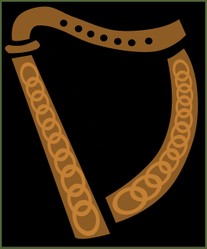
Blind people played the harp by the feel of it, and the fact that the Irish harp is not as large as the classical harp helps them to play it. Furthermore, it has no pedals, which differentiates it from the classical harp. It is a medium size harp, some way between a full sized harp and a lyre, which is a small harp.
The clarsach, known as the triangular harp, is known from Irish carvings from the tenth century and from carvings in Pictish Scotland from the ninth. This must not be taken to mean that the Picts invented it, as the harp is an ancient instrument whose origins go back far in human history. It probably originated when someone heard the sound of a bow string twanging and got the idea for making music from it.
WriterArtistMar 20, 2015
WriterArtistMar 20, 2015
jptanabeMar 12, 2015
frankbeswickFeb 20, 2015
A true Irish harp is called a clarsach. The cheaper varieties had brass strings, but traditionally the best strings were bronze. This kind of harp is small and relatively simple, less complicated than the classical harp and the Welsh triple stringed harp. The Irish harp with its metal strings has one characteristic not shared by the gut-stringed Scottish harp: when used rightly its metal strings can replicate the sound of bells. Unlike the classical harp the Irish harp has no pedals.
Another characteristically Irish instrument is the uillean pipes, the national bagpipes of Ireland. The word is pronounced illian. Don't let the difficulties of Gaelic spelling daunt you. I have some Gaelic, but I struggle with the spelling. The uillean pipes make beautiful music.
WriterArtistFeb 20, 2015
WriterArtistFeb 20, 2015
WriterArtistFeb 20, 2015
WriterArtistFeb 20, 2015
frankbeswickFeb 19, 2015
frankbeswickFeb 19, 2015
LindaSmith1Feb 19, 2015
frankbeswickFeb 18, 2015
There is a variety of instruments used in Irish music. The Irish harp traditionally has bronze strings and it is played differently from the Scottish harp, which uses gut strings. The Irish sometimes use bag pipes. There is also the bodhran [borran] a drum made with a goatskin. The harp was replaced by the violin [fiddle] for a time, though it is still used.
You should seek out the music of Turlough O' Calloran, the last of the great harpers of Ireland. One of his greatest pieces is Carolan's farewell to music, which he composed as he lay dying, when he took up his harp for last time. Magnificent!