
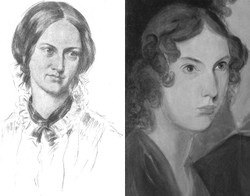
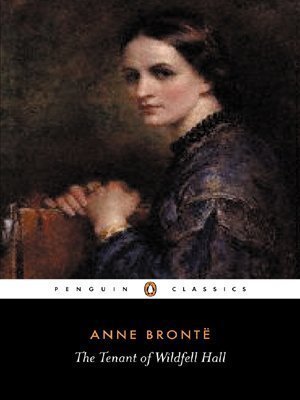
 Originally published in 1848, under the pseudonym Acton Bell, The Tenant of Wildfell Hall was Anne Bronte’s second and, sadly, last novel.
It explores the mysterious life of Helen Graham (Huntingdon), who violates Victorian social convention, and law, by taking her son and running away from an alcoholic and abusive husband.
The novel quickly gained notoriety, and was considered both scandalous and shocking.
And as has been the case for all ‘shocking’ literature throughout history, the novel was instantly and phenomenally successful.
However, in 1850, shortly after Anne’s death, her sister, Charlotte, prevented a republication of the novel.
 Some have suggested that a republication of the novel, which would bear Anne’s own name, rather than her pseudonym, would have prompted a further critical and moral onslaught regarding the novel’s content.
 The suppression could, of course, have been prompted by the fact the issues of The Tenant of Wildfell Hall were a little too close to home.

 However, there is another theory muted by Bronte fans, critics and academics: Charlotte Bronte suppressed The Tenant of Wildfell Hall, because she was jealous of her young sister.
 Whatever the real reason behind Charlotte’s refusal to republish the novel, over the following five years the works of Charlotte and Emily (specifically Jane Eyre and Wuthering Heights) continued to be printed and lapped up by readers.


Comments
WiseFoolJul 15, 2014
Hi, Jo! It is one of those wonderfully intriguing things that will always remain a mystery: why did Charlotte suppress the reprint? Would love to know what was going on in her head at the time.
JoHarringtonJul 15, 2014
KathleenDuffyJul 15, 2014