Wizzley
PopularLatestDiscussedEditor's Choice
AuthorsForum
Wizzley

A community of writers publishing stories worth your time — on the topics they know and love.

Explore

  • Popular
  • Latest
  • Discussed
  • Editor's Choice

Community

  • Top authors
  • New authors

Service

  • Help
  • Contact
  • Imprint
  • Terms of Use
  • Privacy

Check out our other international Webhaus communities!

Explore another site:English·Deutsch

© 2026 Webhaus LLC. All rights reserved.

Hobbies & CraftsGames, Crafts, CollectingEducationSchool and LearningFamilyKids and ParentingPlants & GardeningFlowers, Veggies et. al.Video GamesPC & Console Gaming
Article

Lawn Grass as a Dye

Here’s what can happen when you use your grass clippings as a dye.

I've tried dyeing with lawn grass before and wasn't terribly impressed. I got a very pale yellow that was nothing to write home about. This time I tried an ammonia dip and different mordants and discovered that grass can be a wonderful dye. The trick with grass is to get it fresh and get plenty of it. Using alum as a mordant didn't give much color, but experimenting with other mordants was very surprising.

Collect the Grass


grass

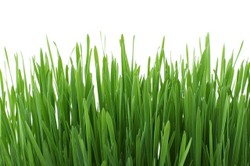
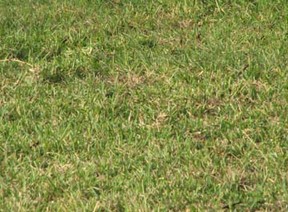
Start with very fresh lawn clippings. Once the grass loses color, it won’t have any chlorophyll to make the dye bath. Remove any hard clumps. You want nice, long blades of grass. You can chop it up; I didn’t, and put it in a stainless steel pan of water. Pots made of aluminum or other materials can affect the color. You might or might not want to do that. 

The book recommends letting it sit for several hours. I didn’t do that either. I did simmer it for a good hour though and came out with a dark greenish brown dye bath.

 

  • Me Heuck Nhs 36009 Stainless Steel Stock Pot 16qt.

    HEUCK STOCK POT * 16 quart * Stock pot with cover * Stainless steel

Advertisement

Alum and Ammonia

I strained out the grass. You might want to use a muslin bag to put the grass in. I added some alum for mordant and a bit of cream of tartar for brightness. Then I put in wet, clean wool. I tried to have a proportion of at least twice as much dyestuff as wool. 

dyed with grass

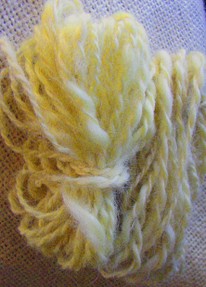
I simmered the wool for at least 30-60 minutes and let it sit for several hours. The color was again a pale yellow. I took half the wool out and divided that again in half. One half went into a pan of ammonia and water for a quick dip. Ammonia will brighten colors and sometimes even change them. This time it did make the yellow brighter and clearer. 

I have a disclaimer here. I tried multiple times to get a photo of the true color. It simply was not meant to be. The colors are pale and just resisted being photographed correctly. This is pretty close. The swatch on the right is the plain grass-dyed yarn with alum. The one on the left was dipped in dilute ammonia after dyeing.


  • Hoosier Hill Farm Alum Powder Granulated, 1 Lb.

    Granulated Alum powder is a versatile product. Although alum powder is most commonly used in pickling recipes, to keep pickles crispy, customers have found dozens of other alum ...

  • Frontier Bulk Cream of Tartar Powder, 1 lb. package

    Frontier Cream of Tartar

Advertisement

Blue Vitriol or Copper Sulfate

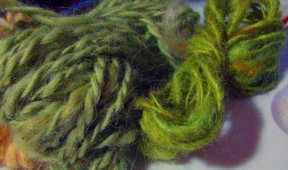
grass dyeI added some blue vitriol to the dye bath with the remaining wool. It immediately turned into a really pretty green. It’s not what the book said it would do, but often the type of plant and how you process it will make a difference.

 Here's a photo of the green on the left with a green from the fustic and blue vitriol on the right for comparison. 

Below is a color chart I used to match the colors with the plain alum on the left, ammonia dip in the center and with copper on the right.


color chart

The Handbook of Natural Plant Dyes: Personalize Your Craft with Organic Colors from Acorns, Black...
Craft of the Dyer: Colour from Plants and Lichens
Wild Color, Revised and Updated Edition: The Complete Guide to Making and Using Natural Dyes

Advertisement

Other Mordants

According to Craft of the Dyer: Colour from Plants and Lichens  by Karen Leigh Casselman, grass gives a clear, strong yellow with alum. I only had alum and blue vitriol on hand this time so couldn’t experiment with the others. She lists the colors as:

  • Clear strong yellow – Alum
  • Brilliant yellow – Tin
  • Gold – Chrome
  • Tan – Blue Vitriol
  • Soft Grey – Iron
  • Yellow Green – Alum and Tin

I could have tried adding some rusty nails for iron or putting the dye in an old cast iron pot. I also could have added some short pieces of copper pipe to the dye for copper. If you tried dyeing with grass, I’d love to hear about your results. 

Updated October 11, 2012

Comments to Dye For

RagtimelilOct 27, 2012

Thanks very much. Most natural dyes are processed the same way.

Rommel COct 27, 2012

Amazing! I never heard that grass can also be used in creating dye. It's very good for you if you could perfect the creation of dye from grass. This may be a good opportunity that awaits you and you would get tons of money from it. lol Kidding aside, it's very creative of you to have discovered it. Maybe on your next post, you can include more pictures about it. We'll look forward to it. Thanks for sharing!

RagtimelilOct 14, 2012

I have dyed with pokeberry. Only problem is the pretty purple color fades to brown. It's called a fugitive dye meaning it doesn't last.

AngelaJohnsonOct 14, 2012

I hadn't heard of using grass as a dye. It's great that you like to experiment. Have you tried pokeberries? The Declaration of Independence was written with pokeberry ink.
Ragtimelil
Ragtimelil
166 articles
FollowMessage

Related articles

  • Detailed Clover Pom Pom Maker Instructions
  • Runescape Fans! Make Yourself a Hat for Runefest
  • How to Make a Simple Turkish Style Drop Spindle
  • How to Make a Needle Felted Pumpkin