One of these says that if you spend the night there alone on the nights before May Day, St John's Day (23 June), or Midwinter Day you would either die, go mad, or become a poet. I did and I am still here, I was already pretty mad according to some people and already a poet so make of that whatever you will!
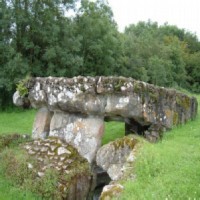
Tinkinswood Burial Chamber is technically a dolmen, which is a capstone on top and other stones below to support it. The massive capstone at Tinkinswood weighs about 36 metric tonnes (40 long tons) and measures 7.4 meters (24 feet) x 4.2 m (14 ft) and is the largest in the UK, and also in Europe. Apparently it was constructed some 1,000 years before they built Stonehenge. Perhaps it was part of a practice run for that but it is certainly a fantastic feat of ancient engineering! How did they shift that huge capstone we are left wondering today?
Tinkinswood was long ago covered in earth and grass as a huge mound but the soil over the passage of time has been removed to leave it standing exposed. It was excavated in 1914, and inside the chamber 920 human bones were discovered, which were nearly all broken. This meant that about fifty people of all ages and sexes were buried there, presumably from the settlement of villagers who lived nearby.
It is thought that Tinkinswood was used as a communal burial site and that the dead bodies were first left exposed to the elements before their bones were moved inside the chamber. There is a quite large circular pit in the ground behind it, which people today make fires in when they camp there and it is possible the bodies were first put in this pit.



Comments
BardofElyOct 25, 2012
RagtimelilOct 25, 2012