
Wizzley
PopularLatestDiscussedEditor's Choice
AuthorsForum
Wizzley

A community of writers publishing stories worth your time — on the topics they know and love.

Explore

  • Popular
  • Latest
  • Discussed
  • Editor's Choice

Community

  • Top authors
  • New authors

Service

  • Help
  • Contact
  • Imprint
  • Terms of Use
  • Privacy

Check out our other international Webhaus communities!

Explore another site:English·Deutsch

© 2026 Webhaus LLC. All rights reserved.

MusicInstruments, Musicians & GenresArt & DesignArt and The ArtsElectronicsComputers and GadgetsCulture & SocietyHistory, Religion, PoliticsEntertainmentMovies, Celebs and TV
Article

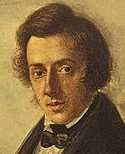
Chopin: The Genius Who Wrote the Revolutionary Etude

Frédéric Chopin, the great Polish-French composer and pianist, wrote all sorts of romantic music for the piano -- mazurkas, polonaises, nocturnes, ballades, and more.

Born in Poland and living in Paris for most of his life, Chopin composed all sorts of Romantic music for the piano. This music is still highly popular today when played by piano virtuosos. For almost ten years, Chopin lived with the famous French writer, George Sand (Amandine Dupin). After twenty years of pouring out his heart into his highly inventive and emotional music, he died of consumption (tuberculosis) -- at the age of just 39 years.

Life of Chopin

Frédéric Chopin was born in Poland in 1810. He was musically precocious and composed his first piece of music at the age of seven. He performed in public for Czar Alexander I of Russia at the age of eleven.

He studied at the Warsaw Conservatory in the years from 1826 to 1829. His teacher, Józef Elsner, recognized Chopin's "musical genius" and allowed his student to mature "according to the laws of his own nature" (rather than constraining his studies with narrow, academic rules).

Chopin visited Berlin and Vienna. He continued performing in public and composing and received increasing recognition. All this occurred against the uprisings by Polish patriots against the repressive Russian rule of their country.

In 1831 Chopin went to live in Paris. He would never return to live in Poland. In the French capital he played a number of concerts and became a darling of the intellectual salons. He met important composers who lived in Paris -- such as Liszt, Berlioz, Mendelssohn and Bellini.

Liszt introduced Chopin to the female French novelist, George Sand (known also as Amandine Dupin and Madame Dudevant), with whom he was to have a close relationship in the years 1838 to 1847.

Chopin kept composing and taught wealthy piano students, with the result that he only occasionally gave public piano recitals (in fact, it is said that he gave just over 30 public performances in his whole life).

In the years 1838-39, Chopin was in declining health and he and George Sand spent an uncomfortable summer on the island of Majorca. His relationship with Sand ended after a quarrel in 1847.

His final years were spent in Paris, where he died (it is said of tuberculosis) in 1849. He was buried there in the Pere-Lachaise Cemetery.

Chopin - Fantasie Impromptu

Pianist: Valentina Igoshina

https://youtube.com/devicesupport

The Musical Works of Chopin

Chopin's musical works included (in numerically descending order):

  • 59 mazurkas
  • 27 etudes (for example, the Revolutionary Etude)
  • 27 preludes
  • 21 nocturnes
  • 20 waltzes (for example, the Minute Waltz)
  • 18 polonaises
  • 4 ballades
  • 4 impromptus (for example, the Fantasie Impromptu)
  • 3 sonatas
  • 2 piano concertos
  • 1 funeral march

Frédéric Chopin - Prelude in E Minor (op. 28, no. 4)

Pianist: Aldona Dvarionaite. So sad and lonely!

Frédéric Chopin - Prelude in E-Minor (op.28 no. 4)

The Heritage of Frederic Chopin

Frédéric Chopin was one of the most important composers of the Romantic era.

He is regarded as the master of the piano keyboard. He was one of the main composers ever  to have extended the mechanical and expressive capacities of the piano. It was Chopin who, above all, as a composer proved that the piano was a worthy solo concerto instrument for classical music.

As a performer, he showed innovative ways of playing the piano, using a lighter, more responsive touch.

As a composer, he wrote clear, transparent, singing (cantabile) melodies which had a romantic, personal and often somewhat melancholic and fragile shade to them. HIs pieces often showed great ranges and changes of mood and rhythm. His works exhibited a sense of great lyricism and beautiful harmonies.

Chopin was also a nationalist composer. His heart was always with his poor, downtrodden homeland of Poland. Many of his pieces drew an inspiration from the rhythms and melodies he had heard in Poland during his youth. He composed music to accompany a number of Polish texts.

Frédéric Chopin and George Sand

Frédéric Chopin and George Sand (oil painting after sketch by Eugène Delacroix)

Chopin on the Internet

Frédéric Chopin Quotes
Quotes from and about Chopin.

Chopin (Notable Names Database)
Some interesting facts from Chopin's life.

Chopin - Revolutionary Etude (Opus 10 No. 12)

Pianist: Sviatoslav Richter

Richter plays Chopin Revolutionary Etude

Books about Chopin

Advertisement

More Great Classical Music

  • Tchaikovsky: The Genius Who Composed Swan Lake

    Pyotr Ilyich Tchaikovsky was a Russian composer of the Romantic era. He wrote music for the ballets, Swan Lake and The Nutcracker, symphonies, fantasies, operas, and much more.

  • Debussy: The Genius Who Wrote Clair de Lune

    Claude Debussy is the foremost figure in impressionism in music. He introduced new kinds of melody and harmony, which often suggest oriental music.

  • Wagner: The Genius Who Composed Tristan and Isolde

    Richard Wagner was a great German composer of the 19th century. He wrote a number of magnificent operas, such as "Tannhauser", "Lohengrin" and "Tristan and Isolde".

Updated May 21, 2015

Comments

DavidPaulWagnerMar 24, 2012

Glad you love Chopin! So do I!

YeirlMar 24, 2012

Chopin is my number 1 pianist since I was ten. Truly enjoyed Youtube.
DavidPaulWagner
DavidPaulWagner
32 articles
FollowMessage

Related articles

  • Beethoven: The Genius Who Composed The Moonlight Sonata
  • Music Book Review: Venetian Curiosities by Donna Leon, Baroque Era Title #2 With Vivaldi Concerti CD
  • Music Book Review: Handel's Bestiary by Donna Leon, With CD of 12 Arias, as Baroque Era Title #1
  • Mozart Symphonies - Best Recordings and Favorite Symphonies