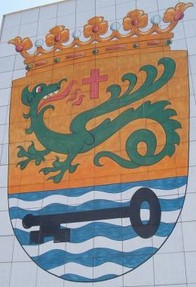
Actually, controversial ex-football commentator turned conspiracy theorist David Icke thinks the world is being run in secret by shape-shifting reptiles, which long ago intermingled their genes with humans, and that the royal families, American presidents and world leaders are of this hybrid bloodline. It's a very weird theory but it got me wondering about what dragons actually are.
We are all brought up to think of them as mythical beasts but if they were never real why are they important enough to be a big part of heraldry, legend and culture worldwide? If they are based on dinosaurs this poses another mystery because they were supposed to have become extinct long before humans were around.
Whatever the truth is there are plenty of lizards around in the world today and they are like mini-dinosaurs and dragons. They have fascinated me since I was a little boy so finding them all over Tenerife was another reason I wanted to live here.
The first type I saw was the Tenerife Lizard (Gallotia galloti ssp. eisentrauti), the males of which have handsome blue throats and spots of the same colour on their sides and green shading on their backs. This subspecies is mainly found in the area of Puerto and is very adaptable, both in choice of where it lives and what it eats.
I've seen them on building sites, on cliffs and on the beach and being omnivores they include all sorts of food in their diets. I remember watching a male licking his lips as he licked a red lolly stick that someone had dropped.
A friend of mine does organic gardening and was showing me they have to put netting over their carrot patch or else the lizards will eat them all. This omnivorous diet usually serves the lizards well but sadly also gets them into trouble with farmers who will resort to poison to protect their crops and unfortunately this can then kill hawks and other birds that eat them.
Besides the Tenerife Lizard, which has the not so colourful but widely distributed subspecies galloti, there is the Tenerife Speckled Lizard (Gallotia intermedia) that only lives on the Teno peninsula from Los Gigantes up to Buena Vista. This species can get to a length of 45 cm or more and has been referred to as the "Giant Lizard" of Tenerife.
Because there were only about 500 living in scattered colonies and these were under threat from feral cats, rats and building developments, a breeding programme was set up at the Fundación Neotrópico in La Laguna. Baby lizards have been hatched there and one at least has become a bit of a media star with a picture in the press. Another colony of Giant Lizards has been reported living in the Guaza Mountains. Fortunately for these reptiles what we consider inhospitable terrain makes an ideal hideaway home.
But it was in La Laguna where I saw my first Skink. I love skinks with their sleek and shiny, slinky looks, so shiny that they look like they've just been polished.
Tenerife has one type called the West Canary Skink and one day while walking up the mountain road in Las Mercedes I was lucky enough to find one on a wall that would let me pick it up and was "tame" enough to stay on my hand for a while.
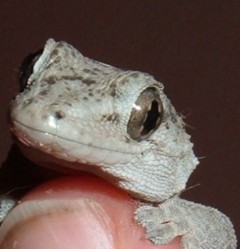
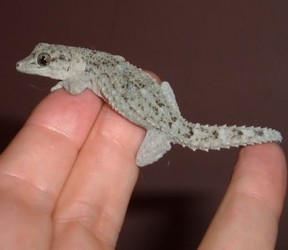
Besides the lizards and skinks there are two types of Gecko to be found here. The Turkish Gecko, which is a pinky-brown colour and often seen on walls at night, and the much darker grey-black Tenerife Gecko.
Geckos have amazing abilities and can walk up flat surfaces including walls and windows and can even be seen upside down on ceilings. They are considered a lucky omen if you see them in your house, and you will certainly be glad to hear that these little fellows love to eat flies, cockroaches and other insect pests.





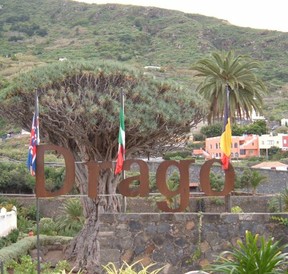 Knowing that there are loads of lizards, skinks and geckoes in the very aptly named Parque del Drago in Icod de los Vinos, where the incredible thousand-year old
Comments
No comments yet.